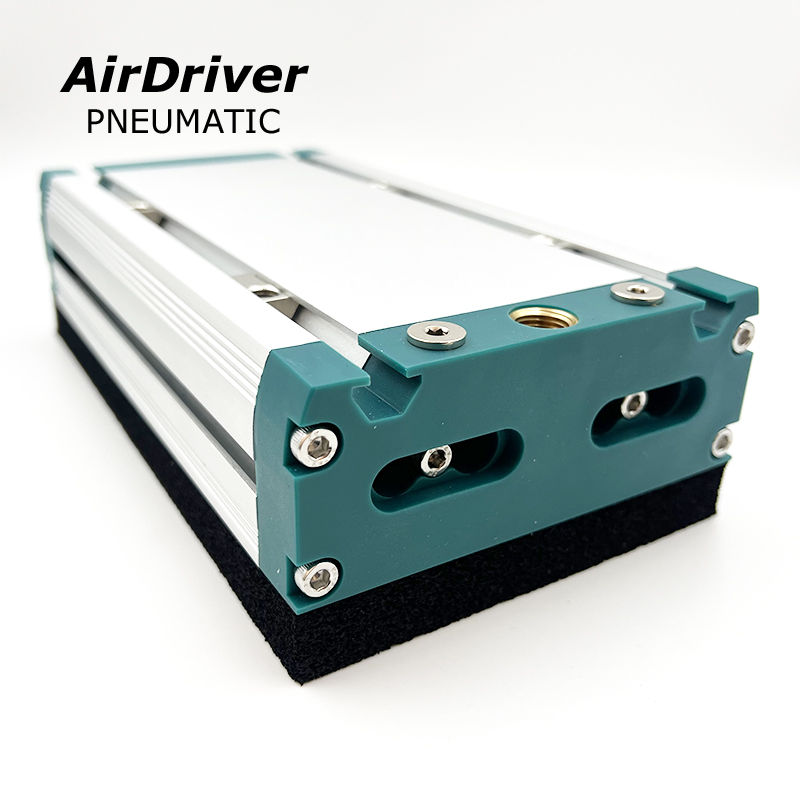
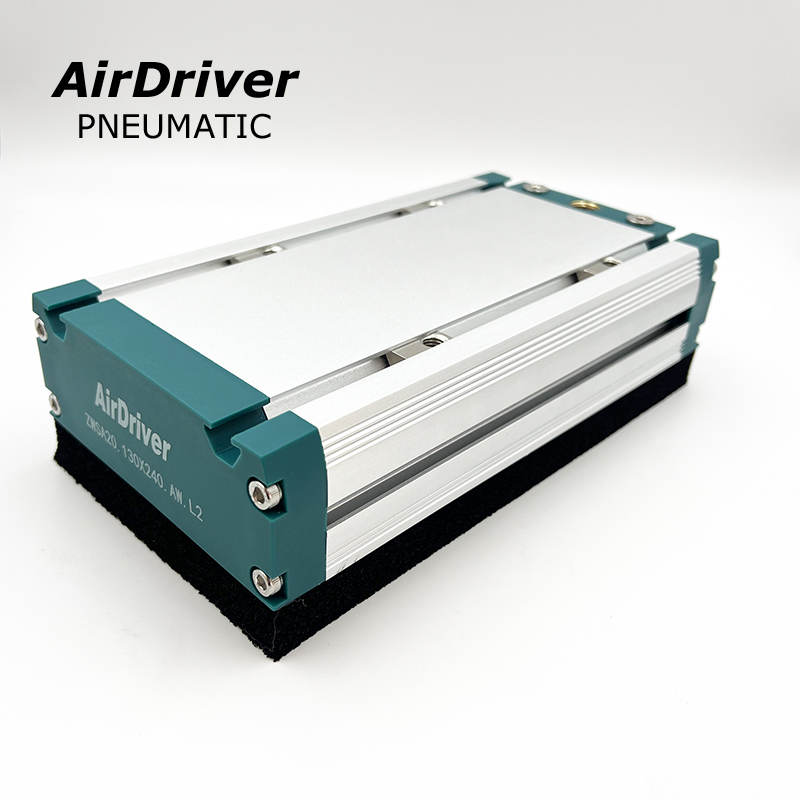
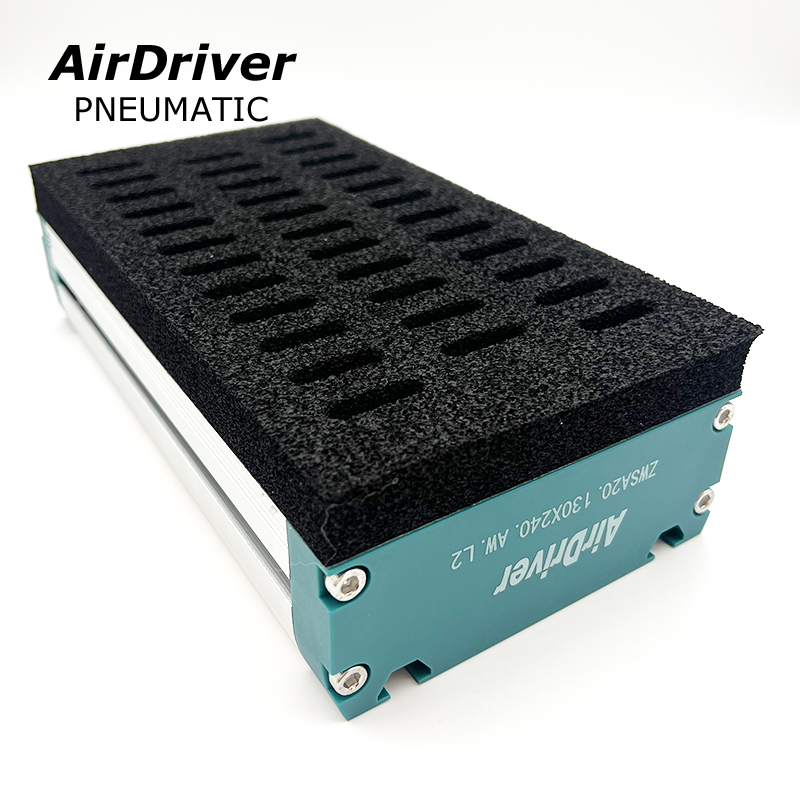
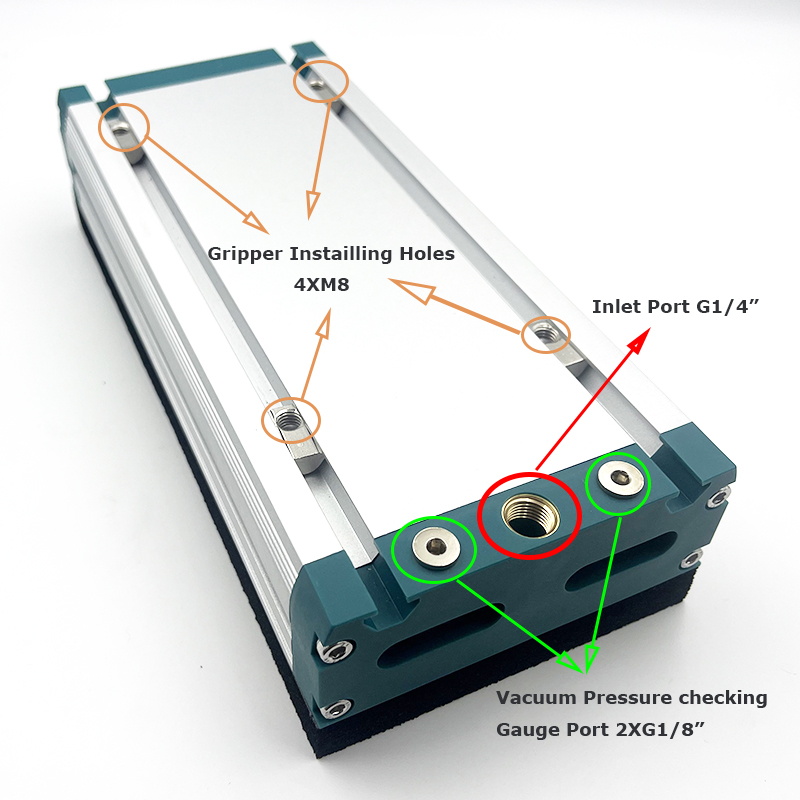
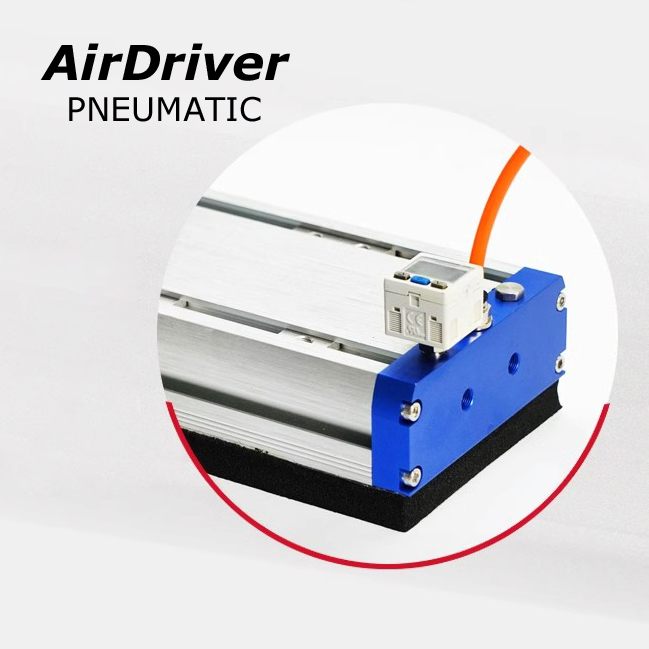
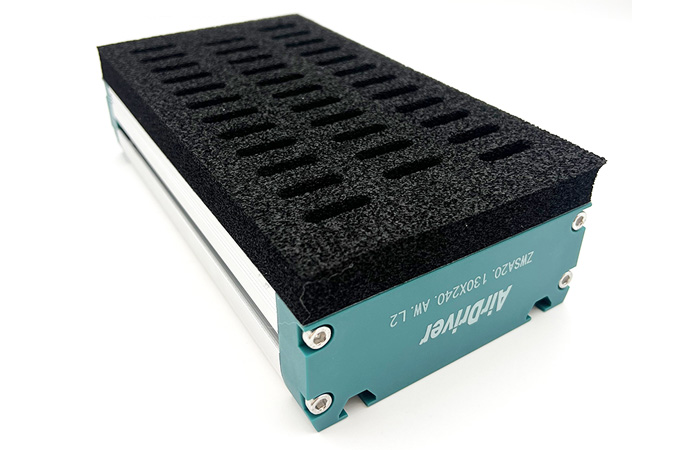
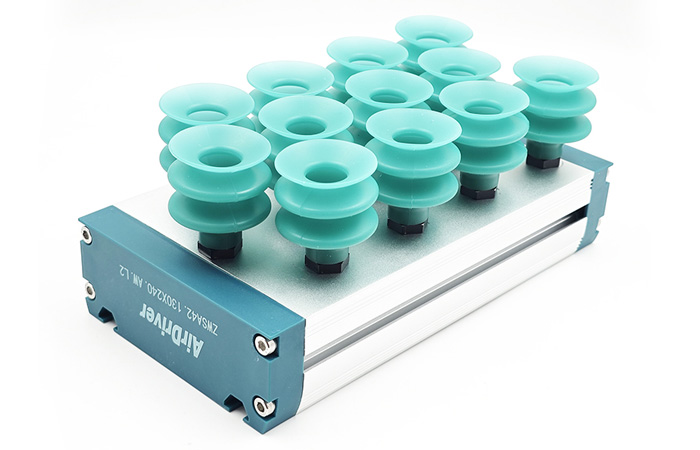
No need to replace the suction cup, it can adapt to various irregular workpieces;
Large area adsorption, strong gripping force and uniform distribution, not easy to damage the workpiece;
Integrated design, easy installation, compatible with robotic arms/automation equipment.
Vacumm Generator Built insideWith One Way Check ValveSuction Well Even didn’t whole touchedVacuum Flow Leakproof
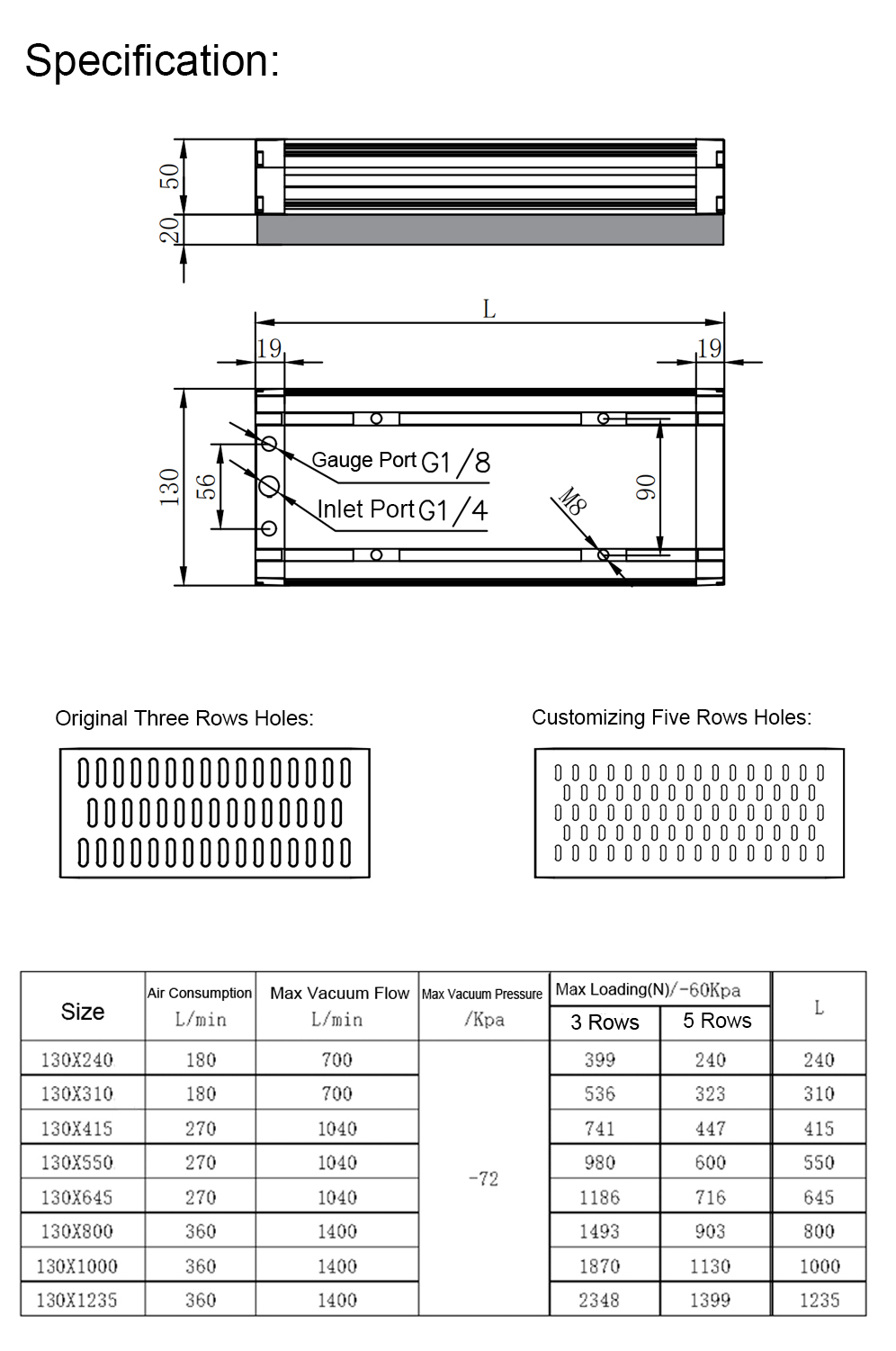
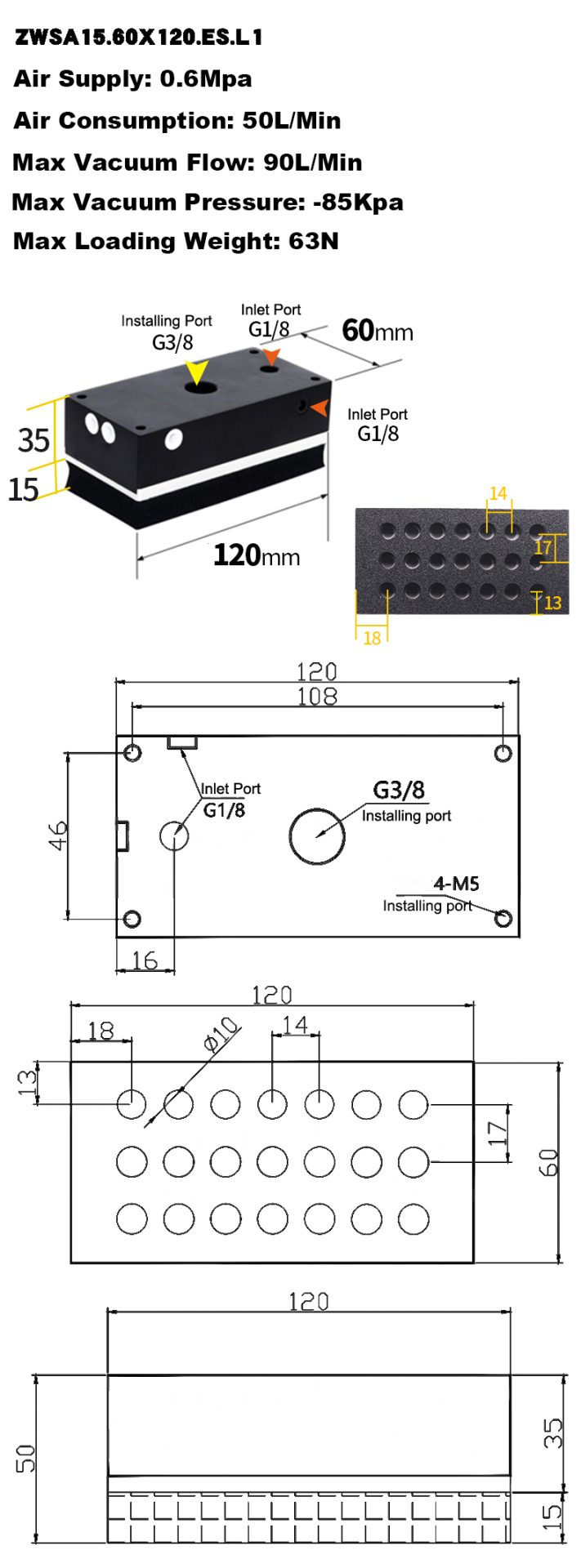
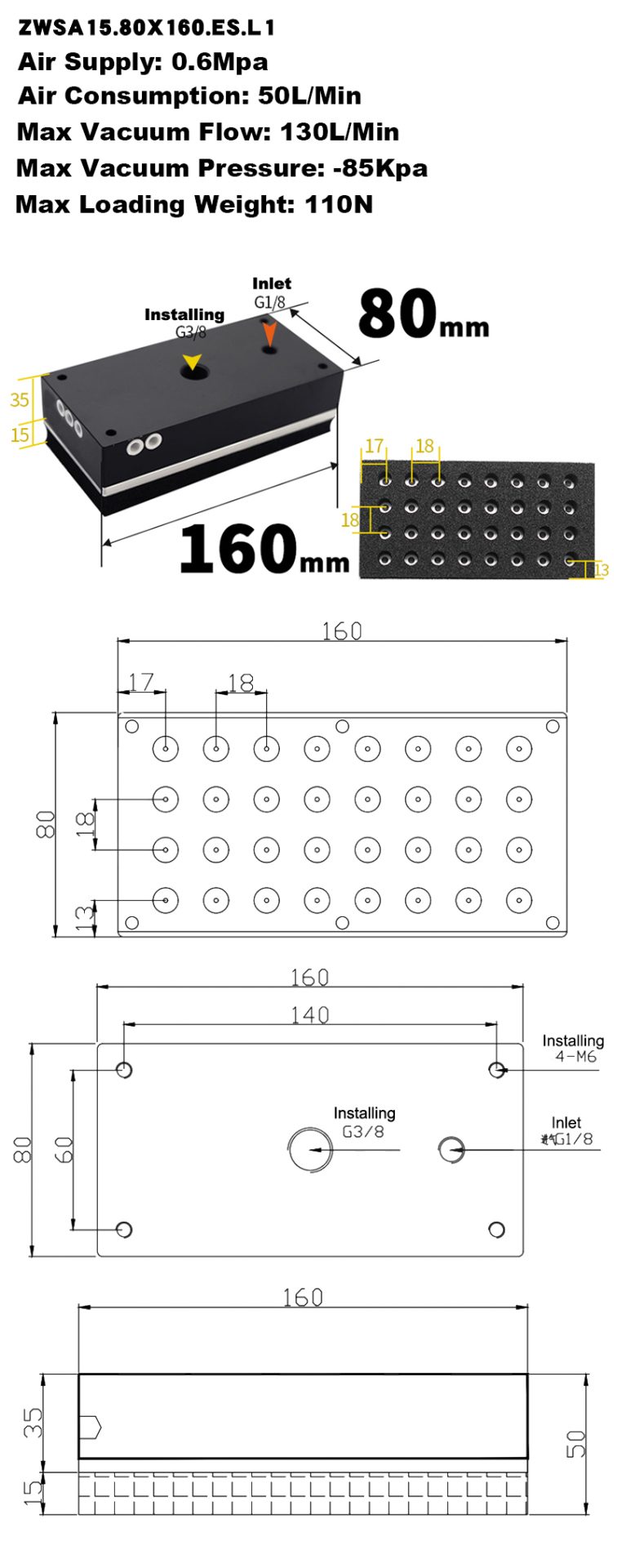
More Regular Model Size Pls Download Catalogue for checking:
ZWSA Sponge Pad Model Foam Vacuum Gripper For Robot Arm
Model
Sponge Pad Thickness
Width(mm)
Length(mm)
Check valve Option
Vaccum Flow
ZWSA
15 / 20
60 / 80 / 130
120 / 160 / 240 / 315 / 415 (Customizing)
ES (Throttling Valve)
L1 (small Flow)
AW (Check Valve,Only Suction Upside)
L2 (Mid Flow)
SW (Check Valve,Can Suction Crosswise,But more working flow demand)
L3 (Big Flow)
Apply On Wood Suction Gripping:
Apply On Rough Surface Gripping:
Ordering Order Example:
ZWSA20.130X240.SW.L3
Related articles
What Is Gripper In Robotics?
A robotic gripper is an end-effector mounted on a robot arm used to grasp, hold, and manipulate objects. It acts like a “hand” and can be mechanical, pneumatic, electric, or vacuum-based depending on the application requirements.
What Is A Sponge Vacuum Gripper?
A sponge vacuum gripper is a vacuum-based end-effector that uses a porous foam (sponge) material to create a seal on irregular or delicate surfaces. It distributes suction evenly, making it suitable for soft, curved, or uneven objects.
How Does A Pneumatic Vacuum Generator Work?
A pneumatic vacuum generator works using the Venturi effect. Compressed air passes through a narrow nozzle, creating a pressure drop that generates vacuum suction. This vacuum is then used to operate vacuum grippers or suction cups.
How To Choose A Vacuum Gripper For Robot Arm?
Choosing a vacuum gripper depends on object shape, weight, surface material, and production speed. Flat and smooth surfaces typically use suction cups, while porous or irregular objects may require sponge or foam grippers. Cycle time and vacuum source compatibility are also key factors.
Sponge Vacuum Gripper Vs Suction Cup
A sponge vacuum gripper is better for uneven, porous, or fragile surfaces due to its adaptive sealing ability. A suction cup is more efficient for flat, smooth, and non-porous surfaces where strong, direct vacuum sealing is possible.
Venturi Vacuum Generator Vs Electric Vacuum Pump
A Venturi vacuum generator uses compressed air to create vacuum quickly and is compact with no moving parts, but it consumes air continuously. An electric vacuum pump is more energy-efficient for long operating cycles and provides stable vacuum without constant air supply.
Best Vacuum Generator For Robotic Gripper
The best vacuum generator depends on application needs: Venturi generators are ideal for high-speed pick-and-place tasks with available compressed air, while electric vacuum pumps are better for energy efficiency, continuous operation, and systems without air compressors.