

Robot vacuum gripper is one of the most critical components in modern automation systems, especially in packaging, logistics, and manufacturing environments where speed, flexibility, and reliability directly affect production efficiency. When you work with collaborative robots, the performance of your gripping system often determines whether your entire automation cell runs smoothly or becomes a bottleneck.
In real industrial scenarios, a cobot gripper is not just a tool—it is the “decision point” between stable automation and frequent downtime. If you choose the wrong suction cups or vacuum structure, you may face issues like air leakage, unstable lifting, or inconsistent cycle times. That’s exactly why selection matters more than people usually expect.
In this guide, you will learn how suction cups work, how to evaluate different vacuum systems, and how to choose the right configuration for your application. This is written from a procurement and engineering perspective, so you can use it directly when evaluating suppliers or planning your next automation upgrade.

A robot vacuum gripper is an end-of-arm tooling system that uses negative pressure (vacuum suction) to pick up and move objects without mechanical clamping. Unlike traditional mechanical grippers, vacuum-based systems rely on airflow and pressure differences rather than physical force.
A typical system includes:
● Suction cups or foam pads
● Vacuum generator or ejector
● Air control valves
● Mounting interface for robotic arms
In many industrial applications, electric vacuum gripper is preferred because it reduces mechanical stress on products and allows faster cycle times. This is especially important in packaging and palletizing environments where thousands of repetitive cycles happen every day.
From a practical point of view, when you integrate a cobot gripper, you are not just choosing hardware—you are defining how your robot interacts with real-world variability like surface texture, weight distribution, and product fragility.

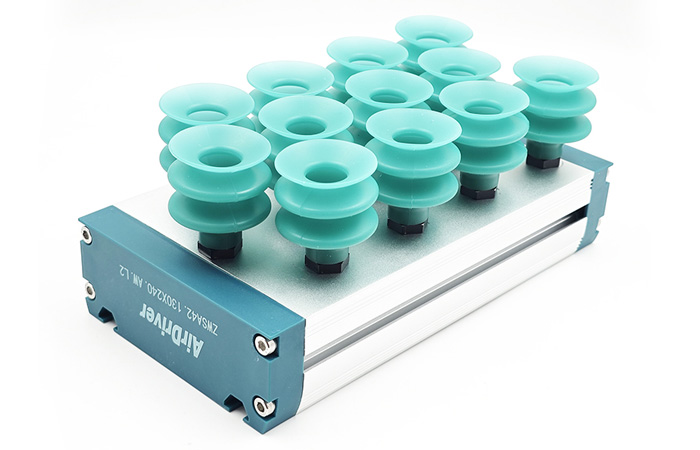
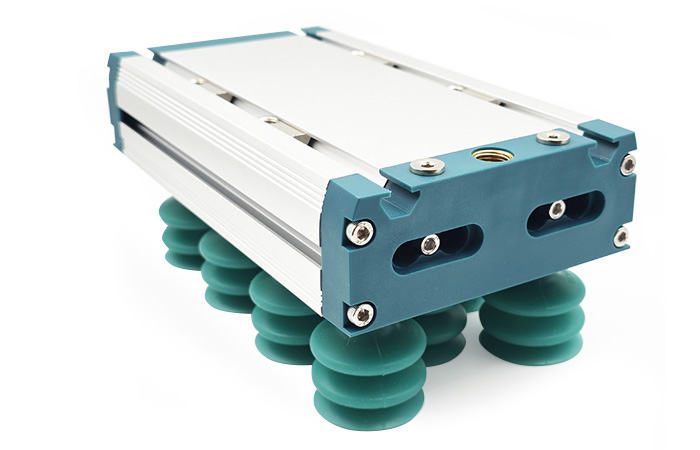
Industrial vacuum suction cups are the actual contact interface between the gripper and the object. They are the “working end” of a vacuum system.
A foam vacuum gripper or suction cup setup determines:
● How much weight can be lifted
● Whether porous materials can be handled
● How stable the grip is during motion
● How fast the system can release objects
If the suction cup is not properly matched to the application, even a high-performance robot vacuum gripper solution will fail in real production environments.
For example, in carton handling, small air leaks caused by poor surface matching can significantly reduce lifting performance. In irregular product handling, rigid suction cups often fail to maintain a stable seal.
That’s why suction cup selection is not a secondary detail—it is a core design decision.
There are several types of vacuum-based gripping systems used in modern automation.
These are the most widely used systems in packaging and logistics. A vacuum gripper for cobot in this category is typically designed for stable, repeatable operations with moderate product variation.
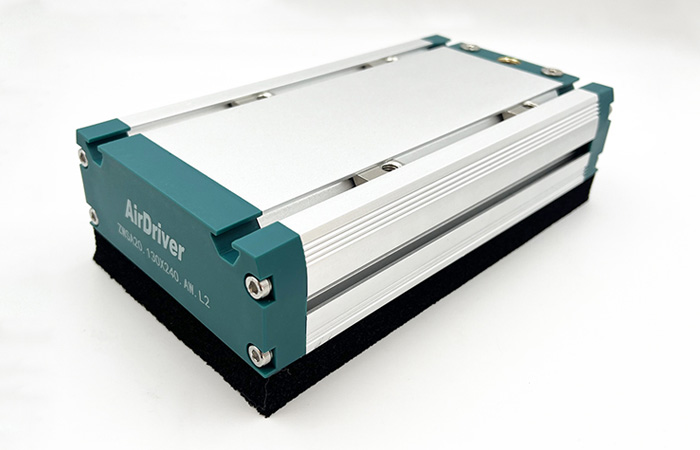
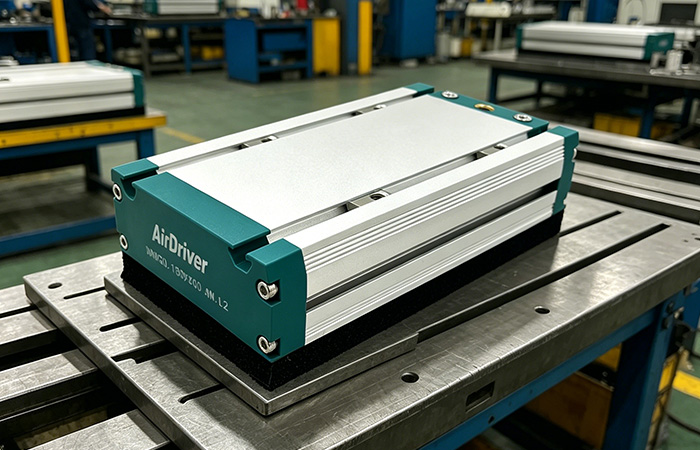
A foam vacuum gripper is commonly used in environments where product shapes are inconsistent. It is especially useful in carton stacking, palletizing, and mixed-SKU handling scenarios.
In real-world applications, foam systems reduce the need for frequent tool changes, which improves overall line efficiency.
A cobot gripper designed for vacuum applications focuses on safety, flexibility, and ease of integration. These systems are widely used in collaborative environments where human-robot interaction is required.
These systems are designed for higher payload applications such as logistics, palletizing, and industrial packaging lines where speed and durability are critical.

Selecting the right system requires evaluating multiple engineering and operational factors.
You need to understand the maximum and average weight of your products before selecting a cobot gripper solution.
Smooth, porous, or irregular surfaces behave differently under vacuum pressure. This directly affects system stability.
High-speed production lines require faster vacuum generation and release cycles.
Dust, humidity, and temperature variations can affect suction performance over time.
A vacuum gripper manufacturer must ensure compatibility with different robotic platforms and controllers.
If your production involves multiple product types, a custom vacuum gripper may be necessary to ensure consistent performance.
Long-term reliability is often more important than initial purchase cost in industrial automation systems.
For further reference on vacuum mechanics principles, you can review:
When evaluating suppliers, you are not just buying a product—you are selecting a long-term automation partner.
AirDriver provides industrial-grade solutions as a vacuum gripper supplier focused on OEM and ODM customization. This is especially important when standard products cannot fully match your production requirements.
Key advantages include:
● Custom engineering capability
● Stable industrial quality control
● Fast adaptation to project requirements
● Full system integration support
In many cases, a vacuum gripper manufacturer that can provide both standard and customized solutions becomes significantly more valuable than a low-cost supplier offering limited flexibility.
Understanding the difference between foam and suction-based systems is essential when evaluating a cobot gripper solution.
A foam vacuum gripper distributes vacuum force across a wider surface area, which makes it more adaptable to uneven or porous surfaces. This is especially useful in packaging environments where cartons vary in size or surface condition.
A suction cup system, on the other hand, creates localized sealing points. It performs better on smooth and consistent surfaces but may struggle with irregular shapes.
Key differences:
● Foam systems → flexible, adaptive, forgiving
● Suction cups → precise, efficient, surface-sensitive
● Hybrid systems → balanced performance for mixed applications
In many factories, you will see both technologies combined in a single system depending on production requirements.
The comparison between foam vacuum gripper vs suction cup is not about which is better—it is about which is more suitable for your specific workflow.
Packaging and palletizing systems
One of the most common uses of a vacuum gripper for palletizing is in automated stacking systems. These systems reduce manual labor and increase consistency in warehouse operations.
In high-volume packaging lines, a packaging line vacuum gripper ensures continuous flow without interruptions caused by manual handling.
Pick and place automation
A pick and place vacuum gripper is widely used in electronics, plastic molding, and mixed-product sorting environments. It enables precise handling without damaging sensitive components.
Irregular object handling
A vacuum gripper for irregular objects is essential when dealing with deformable or non-standard products such as bags, textiles, or irregularly shaped components.
General robotic automation systems
A robot vacuum gripper solution is often deployed in integrated robotic cells where flexibility and modularity are required across multiple production stages.
You should use a vacuum gripper for cobot when handling cartons, bags, or fragile items that require non-contact gripping and high-speed automation.
A cobot gripper is increasingly becoming the standard in modern automation because it combines safety with flexibility.
Compared to traditional systems, a robot vacuum gripper solution offers:
● Easier integration
● Safer human-robot interaction
● Faster deployment cycles
● Higher adaptability in mixed production environments
In real factories, this shift is not theoretical—it is already happening in packaging, logistics, and light manufacturing sectors.
Automation systems are evolving rapidly, and vacuum technology is becoming more intelligent.
Key trends include:
● AI-based object recognition
● Adaptive pressure control
● Predictive maintenance systems
● More flexible foam vacuum gripper designs
These trends indicate that future systems will not just execute commands—they will adapt dynamically to changing production conditions.
Choosing the right robot vacuum gripper is a critical decision that directly impacts automation efficiency, production stability, and long-term operational cost. Whether you are handling packaging, palletizing, or irregular object manipulation, the correct suction cup configuration and system design can significantly improve performance.
A properly selected cobot gripper ensures that your automation system runs smoothly even under real-world variability. In many cases, switching to a more suitable vacuum-based system leads to immediate improvements in cycle time, product handling accuracy, and overall reliability.
If your production line requires flexibility, scalability, or custom engineering support, working with a capable partner like AirDriver can help you move beyond standard automation into a more optimized and efficient production system.