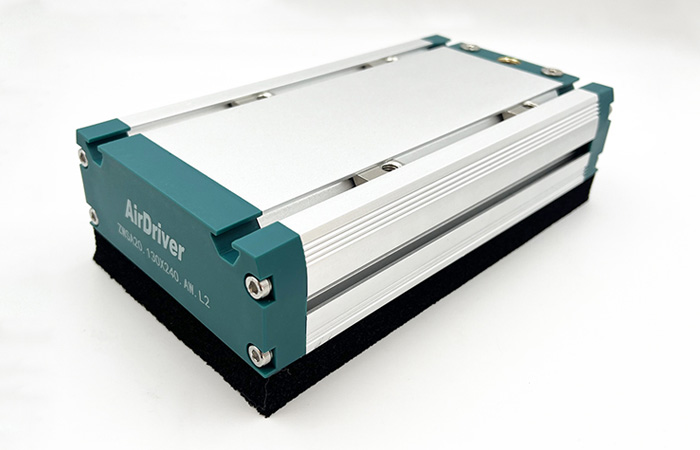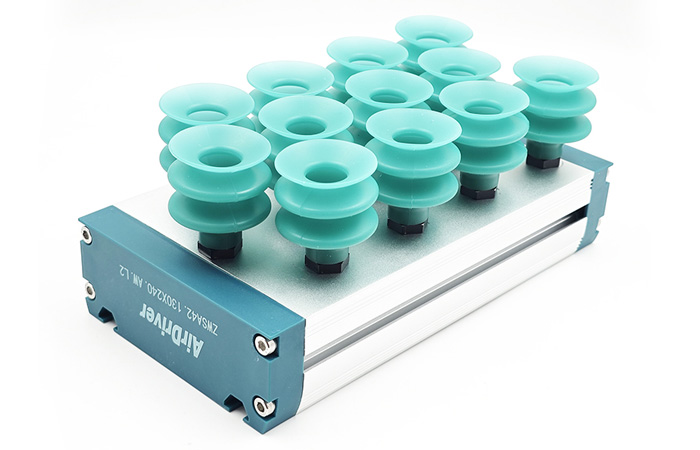


In modern automation, production stability is everything. Even a few seconds of unexpected downtime can affect delivery schedules, labor costs, and customer satisfaction. That’s why more manufacturers are turning to Vacuum Foam Grippers for flexible and reliable handling. Whether you work in packaging, electronics, automotive assembly, or collaborative robotics, foam vacuum technology helps you reduce errors, improve consistency, and keep your production line running smoothly — even when products are irregular, fragile, or difficult to handle.
Production instability often comes from inconsistent handling. Products shift, slip, deform, or fail during transfer. Traditional gripping methods may work well in fixed environments, but real-world manufacturing rarely stays predictable for long.
This is where Industrial Foam Vacuum Gripper systems stand out. They adapt quickly, grip securely, and tolerate variation better than many rigid end-effectors.

One of the biggest challenges in automated handling is maintaining stable suction on products with uneven surfaces or changing dimensions.
Foam vacuum grippers solve this issue by using a compressible foam sealing layer. Instead of depending on perfectly flat contact areas, the foam conforms to the product surface automatically. That small design difference changes everything on a busy production floor.
You’ll notice the advantage immediately when handling:
● Slightly warped cartons
● Flexible plastic packaging
● Mixed-size products
● Textured surfaces
● Lightweight components with shifting centers of gravity
Unlike rigid suction cups, foam surfaces distribute vacuum pressure more evenly. This creates a more forgiving grip and significantly lowers the risk of dropped products.
A packaging manufacturer in Southeast Asia, for example, replaced traditional cup-based tooling with AirDriver foam systems on a high-speed carton line. Before the upgrade, the line experienced frequent micro-stoppages caused by misaligned cartons. After installation, downtime related to gripping issues reportedly dropped by nearly 30%.
That kind of improvement may sound small at first… but across a full production year, it translates into thousands of additional operational minutes.
● Stable vacuum distribution across uneven products
● Reduced product slippage during acceleration
● Better handling of porous materials
● Improved reliability in high-speed operations
● Lower rejection rates during automated transfer
Manufacturing environments are becoming more flexible. Product variations increase every year, especially in e-commerce packaging, electronics, and consumer goods production.
Traditional grippers often require multiple tooling changes when product dimensions vary. That creates delays and increases labor involvement.
A Foam Gripper For Robots eliminates much of this complexity.
Because the foam surface molds itself around the product shape, one gripper can often handle multiple SKUs without mechanical adjustment. That flexibility becomes incredibly valuable when you’re managing mixed production batches.
You might handle:
● Open boxes
● Perforated materials
● Curved plastic housings
● Metal components with cutouts
● Irregular consumer packaging
The foam compensates for minor dimensional inconsistencies automatically. In practice, this means fewer changeovers and less operator intervention.
Honestly, many purchasing teams underestimate how expensive tooling changeovers become over time. The direct labor cost is visible, sure. But the hidden productivity loss? That’s usually much larger.
| Feature | Foam Vacuum Gripper | Standard Suction Cup |
|---|---|---|
| Surface Adaptability | Excellent | Limited |
| Irregular Shape Handling | Strong | Moderate |
| Product Variation Support | High | Low |
| Tool Change Frequency | Reduced | Frequent |
| Vacuum Leakage Resistance | Better | Lower |
| Production Stability | High | Moderate |
You’ll especially see these benefits in automated warehouses and packaging facilities where product dimensions constantly change.
● Supports mixed-product production lines
● Reduces tooling inventory requirements
● Minimizes setup time between batches
● Improves automation flexibility
● Helps future-proof manufacturing systems
Downtime is expensive. Every procurement manager already knows this… but the real problem is how unpredictable downtime affects operational planning.
A failed pick can trigger:
● Robot pauses
● Conveyor stoppages
● Alarm resets
● Operator intervention
● Product jams
Over time, even small interruptions reduce Overall Equipment Effectiveness (OEE).
An Industrial Vacuum Gripper with foam sealing helps stabilize robotic handling by compensating for small positional inaccuracies. This matters because perfect product positioning rarely exists in real factory environments.
Foam vacuum systems tolerate:
● Minor alignment errors
● Height variation
● Surface inconsistency
● Packaging deformation
● Conveyor vibration
This tolerance reduces fault frequency and keeps robotic cells running longer without intervention.
A European logistics integrator reported that switching to foam vacuum tooling reduced emergency operator callouts during night shifts. The reason was simple: the system became more forgiving.
And forgiving systems tend to be stable systems.
● Fewer robot handling errors
● Lower maintenance interruptions
● Reduced sensor dependency
● Improved unattended operation
● Better line continuity during peak demand
Another interesting point? Foam vacuum grippers can sometimes reduce the need for extremely precise fixturing. That alone may lower installation costs for new automation projects.
Accuracy directly affects production quality. Even slight positioning deviations can damage products or create assembly issues downstream.
Foam vacuum grippers improve placement consistency because they maintain stable product contact during movement.
This becomes especially important in:
● Electronics assembly
● Medical device packaging
● Food handling automation
● Automotive component transfer
● Collaborative robotic systems
A Vacuum Gripper For Cobot is particularly useful in collaborative environments because cobots often operate at lower payloads and variable speeds. Foam gripping helps maintain secure handling without requiring excessive force.
Some manufacturers also prefer foam systems because they reduce surface marking on delicate materials.
That matters more than people think.
A scratched housing panel or dented package may not stop production immediately, but it certainly affects customer perception.
● Better repeatability during placement
● Lower risk of product damage
● Improved handling of fragile components
● Reduced vibration during movement
● Enhanced precision in collaborative robotics
Foam vacuum technology has expanded rapidly across industries because manufacturers increasingly need flexible automation solutions.
Electronics manufacturers often handle fragile and lightweight components with delicate surfaces.
Traditional clamping systems may apply uneven pressure, causing scratches or micro-damage.
Vacuum Foam Grippers solve this problem by creating distributed suction across the contact surface. This enables safer handling of:
● PCB assemblies
● Plastic casings
● Display modules
● Small electronic packaging
● Sensitive finished products
In one consumer electronics factory, foam grippers helped reduce rejected cosmetic parts during robotic transfer operations.
That improvement alone justified the investment within months.
● Reduced surface damage
● Improved gentle handling
● Stable movement at high speed
● Better handling of lightweight products
● Lower defect rates
Cobots continue to expand across manufacturing because they are easier to deploy and safer around human workers.
A Vacuum Gripper For Cobot complements this flexibility perfectly.
Foam vacuum systems work well with cobots because they:
● Adapt to varying products
● Require less programming complexity
● Improve operational safety
● Reduce gripping force requirements
● Support fast redeployment
Purchasing teams often prefer flexible end-effectors because they allow future production changes without major hardware replacement.
That flexibility protects long-term ROI.
Packaging lines demand both speed and reliability.
Boxes shift. Cartons deform. Plastic wrapping changes tension constantly.
An Industrial Foam Vacuum Gripper handles these conditions more effectively than rigid gripping systems because the foam adapts dynamically during contact.
Common packaging applications include:
● Carton palletizing
● Bag handling
● Case packing
● E-commerce fulfillment
● Mixed-load sorting
In high-throughput facilities, the reduction in dropped products alone can significantly improve operational efficiency.
● Faster pick-and-place cycles
● Improved carton handling stability
● Reduced package damage
● Better mixed-load management
● Lower downtime during peak production
Light industrial automation increasingly relies on robotic systems capable of handling product diversity.
A Foam Gripper For Robots helps manufacturers automate operations that were previously difficult because of inconsistent product geometry.
Applications include:
● Consumer goods assembly
● Textile handling
● Plastic molding transfer
● Warehouse sorting
● Secondary packaging
Many system integrators now choose foam tooling specifically because it reduces engineering complexity during deployment.
And yes… fewer engineering headaches usually mean faster project completion.
Automotive production environments demand precision, repeatability, and durability.
Foam vacuum systems are now widely used for:
● Plastic trim handling
● Dashboard component transfer
● Battery module positioning
● Interior assembly operations
● Metal stamping transfer
An experienced Robotic Gripper Manufacturer can customize foam density, airflow design, and suction zones for specific automotive tasks.
That customization often improves both speed and long-term stability.
Traditional suction cup systems still perform well in controlled environments with uniform products.
However, modern production rarely stays uniform for long.
Foam vacuum systems offer several operational advantages when product variability increases.
| Comparison Area | Foam Vacuum Gripper | Traditional Vacuum Gripper |
|---|---|---|
| Irregular Product Handling | Excellent | Limited |
| Setup Flexibility | High | Moderate |
| Product Change Adaptation | Fast | Slower |
| Maintenance Complexity | Moderate | Moderate |
| Surface Contact Coverage | Broad | Narrow |
| Multi-SKU Support | Strong | Weak |
The best choice depends on your production environment.
If your products are identical and highly stable, traditional systems may still work well.
But if variability exists — and honestly, it usually does — foam vacuum technology often delivers better long-term operational stability.
When you plan to Buy Foam Vacuum Gripper systems, you’ll typically choose between standard products and custom-engineered solutions.
Standard systems work well for:
● Simple applications
● Stable product dimensions
● Lower automation complexity
● Faster deployment timelines
● Budget-sensitive projects
Custom solutions are often better when you require:
● Multi-product handling
● Specialized airflow control
● Large-area gripping
● High-speed automation
● Complex robotic integration
An experienced Robotic Gripper Manufacturer like AirDriver can evaluate your application requirements and recommend the most cost-effective configuration.
● Product surface characteristics
● Payload variation
● Cycle time requirements
● Robot compatibility
● Environmental conditions
● Maintenance accessibility
You should also consider long-term operating cost rather than focusing only on initial purchase price.
A cheaper gripper that causes downtime may ultimately cost far more over its lifecycle.
The Foam Vacuum Gripper Price varies depending on:
● Foam material quality
● Gripper size
● Vacuum channel design
● Customization level
● Sensor integration
● Production volume
Low-cost systems may appear attractive initially, but durability and reliability matter much more in industrial environments.
Especially if your production runs 24/7.
Reliable automation is rarely about buying the cheapest component. It’s about minimizing operational disruption.
Yes. Vacuum grippers are highly suitable for collaborative robots because they provide stable handling with lower gripping force. Foam vacuum systems are especially useful for variable products and lightweight materials.
You should evaluate product shape, weight, surface texture, cycle speed, and robot payload. A supplier like AirDriver can help match the gripper configuration to your production needs.
Absolutely. Foam vacuum grippers improve flexibility and simplify handling in collaborative robotic applications where products may vary frequently.
Regular maintenance includes foam inspection, vacuum leakage checks, filter cleaning, and monitoring suction performance. Replacing worn foam seals helps maintain consistent gripping force.
In many flexible automation environments, yes. Foam vacuum systems handle irregular shapes more effectively and usually require less mechanical adjustment.
Pricing varies widely depending on size, customization, materials, and integration complexity. Basic systems may cost a few hundred dollars, while advanced custom systems can be significantly more expensive.
Service life depends on operating conditions, cycle frequency, and material type. With proper maintenance, industrial foam grippers can operate reliably for years.
Yes. Many companies prefer purchasing directly from manufacturers like AirDriver because it improves technical support, customization options, and delivery coordination.
You should evaluate engineering capability, customization experience, industry knowledge, technical support, product reliability, and integration expertise.
Stable automation systems don’t happen by accident. They depend on reliable handling technology capable of adapting to real production conditions — shifting products, irregular surfaces, high-speed movement, and constant operational pressure. That’s exactly where Vacuum Foam Grippers provide measurable value.
Whether you need a flexible Vacuum Gripper For Cobot, a heavy-duty Industrial Vacuum Gripper, or a custom robotic handling solution, foam vacuum technology can improve uptime, reduce handling errors, and support long-term manufacturing efficiency. For procurement teams, the real advantage is not just better gripping… it’s more stable production, fewer interruptions, and stronger ROI over time.
If you’re evaluating automation upgrades, AirDriver can help you select the right foam vacuum gripping solution for your application and production goals.