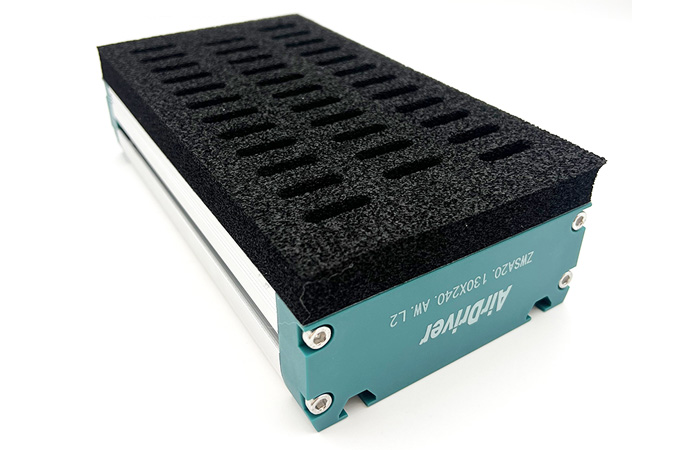


Selecting the right Vacuum Gripper Supplier is a critical decision for any company investing in industrial automation. Whether you are building a new production line or upgrading an existing robotic system, the supplier you choose can directly influence equipment reliability, production efficiency, and long-term operating costs. A professional Vacuum Gripper Supplier should offer more than quality products—they should also provide engineering expertise, customization capabilities, and responsive technical support throughout the project lifecycle. As automation continues to expand across industries such as electronics, packaging, automotive, logistics, and food processing, partnering with an experienced Vacuum Gripper Supplier has become essential for achieving consistent performance and maximizing return on investment. This guide explains the key factors buyers should evaluate before selecting a Vacuum Gripper Supplier for long-term automation projects.
Industrial automation projects often span several years, making supplier selection a strategic business decision rather than a simple purchasing task. While product price is always a consideration, factors such as manufacturing quality, engineering support, delivery reliability, and after-sales service have a much greater impact on the total cost of ownership.
A dependable Vacuum Gripper Supplier understands that every production environment is different. Applications involving delicate electronic components, heavy metal sheets, glass panels, cardboard cartons, or food packaging all require different gripping technologies. Choosing a supplier with extensive industry experience helps ensure that the selected vacuum gripping solution matches your production requirements.
Production downtime can be extremely expensive. Low-quality vacuum grippers may suffer from air leakage, unstable suction force, or premature wear of vacuum cups, leading to frequent maintenance and unexpected interruptions.
An experienced supplier minimizes these risks by offering:
● High-quality vacuum components
● Reliable vacuum generators and ejectors
● Durable suction cups for various materials
● Stable gripping performance under continuous operation
● Comprehensive product testing before shipment
Reliable products contribute to higher production efficiency and lower maintenance costs throughout the equipment’s service life.
A professional Vacuum Gripper Supplier does far more than deliver products. They work closely with customers during system design and implementation, helping engineers select the most suitable industrial vacuum gripper based on factors such as:
● Workpiece dimensions
● Surface material
● Weight and payload
● Robot specifications
● Required cycle time
● Environmental conditions
This engineering support reduces design errors and shortens project development time.
Automation projects often require spare parts, replacement components, and future system expansions. Working with an established supplier ensures product consistency and stable inventory, preventing costly redesigns caused by discontinued models or inconsistent quality.
Suppliers with strong manufacturing capacity can also support OEM and custom vacuum gripper projects while maintaining consistent product standards across multiple production batches.
Manufacturing capability is one of the most important indicators of whether a supplier can support long-term cooperation. A factory with advanced production equipment, strict quality control, and experienced engineering teams is generally more capable of delivering reliable products on schedule.
Many companies advertise themselves as manufacturers, but some are simply trading companies. Understanding the difference helps buyers make informed purchasing decisions.
A genuine manufacturer typically offers:
● Independent production facilities
● CNC machining equipment
● Injection molding capabilities
● Assembly lines
● Quality inspection laboratories
● Product testing equipment
● Engineering and R&D departments
These resources allow manufacturers to control product quality from raw materials to final inspection.

Large automation projects often require hundreds or even thousands of vacuum grippers over multiple years. Buyers should evaluate whether the supplier can maintain stable production during periods of high demand.
Important questions include:
● What is the monthly production capacity?
● How many production lines are available?
● Can urgent orders be accommodated?
● What is the standard lead time?
● How are quality inspections performed?
Reliable production planning reduces delivery delays and supports long-term project scheduling.
Industrial automation evolves rapidly. Manufacturers investing in research and development are better equipped to provide innovative solutions for increasingly complex applications.
An experienced supplier should continuously improve:
● Vacuum gripping systems
● Vacuum robot grippers
● Vacuum end effectors
● Energy-efficient vacuum generators
● Lightweight robotic grippers
● Smart monitoring technologies
Continuous innovation ensures your automation system remains competitive as production requirements change.
Every automation project has unique requirements. Standard products may not always deliver optimal performance, particularly for irregular workpieces or specialized production environments.
Look for suppliers that provide:
● OEM manufacturing
● Custom vacuum grippers
● Customized suction cup configurations
● Multi-cup vacuum gripping systems
● Robot-specific mounting interfaces
● Application-specific engineering solutions
Customization improves gripping stability, reduces cycle time, and enhances production efficiency.
Consistent quality depends on strict manufacturing processes rather than final inspection alone.
A reliable manufacturer should implement quality control throughout production, including:
| Evaluation Item | Why It Matters |
|---|---|
| Incoming material inspection | Ensures component consistency |
| Precision machining | Improves assembly accuracy |
| Leak testing | Prevents vacuum loss |
| Functional testing | Confirms gripping performance |
| Durability testing | Extends service life |
| Final inspection | Guarantees product reliability |
These quality management practices help ensure that every vacuum gripper performs consistently in demanding industrial environments, reducing maintenance requirements and supporting the long-term success of your automation investment.
A capable Vacuum Gripper Supplier should offer a comprehensive product portfolio rather than only a few standard models. Industrial automation applications vary significantly, and different workpieces require different gripping technologies. Suppliers with diverse product lines can provide more suitable solutions while reducing the need to source components from multiple vendors.
Choosing a supplier with a broad range of products also simplifies future system expansion. As production requirements evolve, you can continue working with the same supplier instead of redesigning your automation system around new components.
A complete vacuum solution consists of more than just a suction cup. Buyers should evaluate whether the supplier can provide all the components required for an efficient Vacuum Gripping System, including:
● Vacuum cups for different surface materials
● Vacuum generators and ejectors
● Vacuum filters
● Vacuum switches and sensors
● Mounting brackets
● Vacuum tubing and fittings
● Robotic vacuum grippers
● Complete Vacuum End Effector assemblies
Purchasing these components from a single supplier improves compatibility, simplifies maintenance, and shortens procurement cycles.
Different industries present unique handling challenges. A knowledgeable supplier should understand these requirements and recommend suitable products accordingly.
| Industry | Recommended Solution |
|---|---|
| Packaging | Vacuum Pick and Place Gripper for cartons, bags, and boxes |
| Electronics | Soft suction cups for delicate PCBs and semiconductor components |
| Automotive | Heavy-duty Industrial Vacuum Gripper for metal parts |
| Glass Manufacturing | Large-area vacuum suction systems with safety monitoring |
| Food Processing | FDA-compliant vacuum cups for hygienic handling |
| Logistics | High-speed robotic vacuum grippers for parcel sorting |
Suppliers with cross-industry experience can often suggest practical improvements that increase production efficiency and reduce operating costs.
Standard products cannot solve every automation challenge. Irregular shapes, porous materials, flexible packaging, or heavy workpieces often require customized designs.
A professional Vacuum Gripper Supplier should provide engineering services such as:
● Custom suction cup layouts
● Lightweight aluminum or carbon fiber frames
● Multi-zone vacuum control
● Robot-specific mounting plates
● Custom manifolds
● Integrated sensors for vacuum monitoring
● Quick-change tooling systems
These custom solutions help improve gripping stability, reduce cycle time, and minimize product damage during handling.
Many distributors, machine builders, and automation integrators require private-label products or customized branding. Suppliers offering OEM and ODM services can better support these business models.
Before selecting a supplier, ask whether they can provide:
● Private label production
● Custom logos
● Customized packaging
● Product documentation
● User manuals
● Product certifications
● Dedicated engineering support
These services are especially valuable for companies building their own automation brands or serving regional markets.

Quality should never be judged solely by product appearance or price. A reliable Vacuum Gripper Supplier follows internationally recognized quality management systems and performs rigorous testing throughout the manufacturing process.
Consistent quality not only extends product life but also reduces unexpected downtime, maintenance costs, and warranty claims.
One of the first things buyers should verify is whether the supplier operates under an internationally recognized quality management system.
The most common certification is:
● ISO 9001 – Quality Management System
ISO-certified manufacturers typically maintain standardized production procedures, documented inspections, and continuous improvement processes, resulting in more consistent product quality.
A trustworthy supplier should conduct comprehensive testing before shipment. Typical tests include:
● Vacuum leakage testing
● Holding force verification
● Pressure resistance testing
● Fatigue and life-cycle testing
● Temperature resistance testing
● Functional testing under continuous operation
These tests ensure that each Industrial Vacuum Gripper performs reliably in demanding production environments.
The performance of a vacuum gripper depends heavily on the materials used in its construction.
High-quality manufacturers typically use:
● High-strength aluminum alloys
● Stainless steel components
● Wear-resistant engineering plastics
● Premium silicone vacuum cups
● NBR and PU suction cups
● Corrosion-resistant fasteners
Superior materials improve durability while reducing maintenance frequency and replacement costs.
For companies exporting machinery or operating in global markets, compliance with international standards is essential.
Ask potential suppliers whether their products comply with relevant requirements, such as:
● CE compliance
● RoHS requirements
● REACH regulations
● Industry-specific safety standards
● Customer-specific testing requirements
Although certification requirements vary by region and industry, suppliers familiar with international markets are generally better prepared to support global automation projects.
Quality documentation becomes increasingly important for long-term projects.
A professional supplier should be able to provide:
● Material certificates
● Inspection reports
● Test reports
● Product datasheets
● Installation manuals
● Maintenance guides
● Batch traceability records
Complete documentation helps simplify equipment maintenance, quality audits, and future procurement activities.
The best suppliers view quality as an ongoing process rather than a final inspection step. They actively collect customer feedback, analyze product performance, and refine manufacturing processes to improve reliability over time.
When evaluating a Vacuum Gripper Supplier, ask how they handle customer complaints, warranty issues, and product improvements. A supplier with a structured continuous improvement program is more likely to become a dependable long-term partner, supporting your automation projects with consistent quality, responsive service, and innovative solutions as your production needs evolve.
Selecting a Vacuum Gripper Supplier is not just about purchasing hardware—it is about establishing a technical partnership. Even the highest-quality products may fail to deliver optimal performance if they are improperly selected, installed, or maintained. This is why engineering expertise and technical support should be key evaluation criteria for long-term automation projects.
An experienced supplier works alongside customers from the initial concept through system commissioning and after-sales support, helping optimize productivity while minimizing operational risks.
Every automation application presents unique challenges. Workpiece dimensions, surface texture, weight, cycle time, robot payload, and environmental conditions all influence the selection of an appropriate vacuum gripping solution.
Before recommending a product, a qualified supplier should gather technical information such as:
● Product dimensions
● Product weight
● Surface roughness
● Material type
● Operating temperature
● Production speed
● Robot model
● Installation orientation
● Required safety factor
Instead of recommending the same product for every project, experienced engineers evaluate these variables to design the most suitable Vacuum Gripping System.
For example, lifting corrugated cardboard requires a different suction cup material than handling polished glass or electronic components. Likewise, high-speed packaging lines demand lightweight Vacuum Robot Grippers, while automotive applications often require heavy-duty Industrial Vacuum Grippers with higher holding forces.
A professional supplier should assist customers in designing the complete gripping solution rather than supplying individual components alone.
Typical engineering services include:
● Vacuum circuit design
● Vacuum generator selection
● Suction cup arrangement
● Air consumption calculations
● Vacuum safety analysis
● Robot payload evaluation
● End-of-arm tooling (EOAT) design
● Pneumatic control recommendations
This system-level approach improves efficiency while reducing design errors that may delay project implementation.
For complex automation projects, suppliers capable of providing complete Vacuum End Effector solutions offer significant advantages because all components are engineered to work together.
Reliable suppliers rarely rely solely on theoretical calculations. Instead, they validate designs through practical testing before mass production.
Testing may include:
● Sample workpiece evaluation
● Holding force verification
● Leak detection
● Cycle testing
● High-speed operation simulation
● Vacuum recovery testing
● Durability assessment
Prototype testing helps identify potential issues before equipment is installed on the production line, reducing costly modifications later.
Many leading manufacturers also provide testing reports, allowing customers to compare different vacuum cup materials or gripper configurations based on actual performance data.
Today’s factories increasingly rely on integrated automation systems rather than standalone equipment.
A knowledgeable supplier should understand how vacuum grippers interact with:
● Industrial robots
● Collaborative robots (Cobots)
● PLC control systems
● Vision inspection systems
● Servo positioning systems
● Conveyor systems
● Pick-and-place machines
Suppliers with integration experience can recommend products that simplify installation and improve overall system reliability.
For example, selecting a lightweight Vacuum Pick and Place Gripper can reduce robot payload, allowing faster movement speeds and shorter cycle times without sacrificing gripping performance.
Comprehensive technical documentation reflects the professionalism of a supplier and simplifies installation, troubleshooting, and maintenance.
Useful documentation includes:
● Product catalogs
● CAD drawings
● 2D and 3D models
● Installation guides
● Pneumatic schematics
● Maintenance manuals
● Spare parts lists
● Operating instructions
Many automation equipment manufacturers also prefer suppliers that provide STEP, IGES, or SolidWorks files, enabling engineers to integrate components directly into equipment designs.
Well-prepared documentation shortens engineering time and reduces communication costs throughout the project.
Long-term automation projects require continuous technical assistance after equipment is delivered.
A dependable supplier should provide:
● Installation guidance
● Remote technical support
● Troubleshooting assistance
● Spare parts recommendations
● Product maintenance training
● Warranty service
● Software or firmware updates (where applicable)
Fast response times are particularly important when unexpected production issues occur. Delayed support can lead to prolonged downtime and significant financial losses.
When evaluating a supplier, ask about:
● Technical response time
● Warranty period
● Spare parts availability
● Regional service coverage
● Online technical resources
● Dedicated engineering contacts
These factors often determine how efficiently problems can be resolved during production.
Experience across multiple industries is another strong indicator of a supplier’s capabilities. A Vacuum Gripper Supplier that has successfully completed projects in different sectors is more likely to understand complex application requirements and recommend proven solutions.
Rather than offering generic products, experienced suppliers apply lessons learned from previous projects to improve efficiency, reliability, and safety.
Packaging remains one of the largest application areas for vacuum technology.
Typical handling tasks include:
● Cardboard boxes
● Paper bags
● Flexible packaging
● Plastic containers
● Bottles
● Labels
These applications often require high-speed Vacuum Pick and Place Grippers capable of maintaining stable suction during continuous operation.
Suppliers familiar with packaging automation understand how to balance gripping force, cycle time, and energy consumption to maximize productivity.
Electronic components are often lightweight, fragile, and highly sensitive to contamination.
Suitable solutions include:
● Small-diameter suction cups
● Anti-static materials
● Precision vacuum control
● Lightweight robotic end effectors
Suppliers serving the electronics industry typically have extensive experience handling:
● Printed circuit boards (PCBs)
● Semiconductor wafers
● Mobile phone components
● Display panels
● Precision sensors
Their expertise helps reduce product damage while maintaining high production accuracy.
Automotive production demands reliable automation capable of operating continuously under demanding conditions.
Applications include handling:
● Metal sheets
● Body panels
● Engine components
● Plastic interior parts
● Glass assemblies
Heavy-duty Industrial Vacuum Grippers designed for these environments must provide consistent holding force, long service life, and resistance to dust, oil, and temperature variations.
A supplier with automotive experience is generally well-equipped to support other high-volume manufacturing applications as well.
The rapid growth of e-commerce has significantly increased the demand for automated logistics solutions. Modern distribution centers rely on robotic handling systems to improve picking speed, reduce labor costs, and increase order accuracy. As a result, choosing a Vacuum Gripper Supplier with logistics automation experience is becoming increasingly important.
Typical warehouse applications include handling:
● Corrugated cartons
● Poly mailers
● Parcels
● Plastic totes
● Paper bags
● Consumer goods packaging
Unlike traditional manufacturing environments, logistics operations often process products with different sizes, weights, and surface textures on the same production line. This requires flexible vacuum gripping systems capable of quickly adapting to changing workloads.
An experienced supplier can recommend:
● Multi-zone vacuum control
● Adaptive suction cup layouts
● Lightweight robotic vacuum grippers
● Energy-efficient vacuum generators
● Intelligent vacuum monitoring systems
These technologies improve picking accuracy while maintaining high throughput in automated warehouses.
Food processing requires specialized vacuum handling solutions that meet strict hygiene and safety requirements.
When evaluating suppliers for food applications, verify whether they can provide:
● Food-grade suction cups
● FDA-compliant materials
● Easy-to-clean gripper designs
● Corrosion-resistant stainless steel components
● Hygienic vacuum systems
Applications commonly include:
● Bakery products
● Fresh produce
● Meat packaging
● Beverage containers
● Frozen foods
● Dairy products
Suppliers with food industry experience understand how to balance sanitary design, reliable gripping performance, and production efficiency.
One of the simplest ways to evaluate a supplier is by reviewing previous projects.
Ask whether the supplier can provide:
● Customer case studies
● Application videos
● Reference customers
● Industry success stories
● Long-term cooperation examples
● Export experience
Experienced suppliers are usually willing to demonstrate how their vacuum gripping solutions have improved productivity for customers in similar industries.
If possible, request application examples that closely match your own production requirements. Real-world experience often provides more valuable insight than product brochures alone.
Many buyers focus primarily on the purchase price when selecting a Vacuum Gripper Supplier. While competitive pricing is important, the lowest-priced product does not always provide the best long-term value.
Instead of evaluating only the initial purchase cost, consider the Total Cost of Ownership (TCO), which includes maintenance, energy consumption, spare parts, downtime, and product lifespan.
A higher-quality vacuum gripper may have a higher purchase price but significantly lower operating costs over several years of continuous production.
Consider two suppliers offering similar products:
| Evaluation Factor | Low-Cost Supplier | Professional Supplier |
|---|---|---|
| Initial Price | Lower | Higher |
| Product Quality | Average | High |
| Service Life | Shorter | Longer |
| Maintenance Frequency | High | Low |
| Technical Support | Limited | Comprehensive |
| Spare Parts Availability | Uncertain | Stable |
| Production Downtime Risk | Higher | Lower |
| Overall Value | Lower | Higher |
Although the initial investment may be greater, professional suppliers often reduce overall operating costs through better reliability and service.
Compressed air is one of the most expensive energy sources in industrial automation.
Poorly designed vacuum systems may consume excessive compressed air, increasing operating expenses throughout the equipment’s lifetime.
Ask suppliers about:
● Vacuum generator efficiency
● Air consumption
● Vacuum response time
● Energy-saving technologies
● Intelligent vacuum control
Modern energy-efficient vacuum generators can significantly reduce compressed air usage while maintaining strong gripping performance.
For factories operating multiple production lines, these savings can become substantial over time.
Automation equipment typically operates continuously for many years.
Before selecting a supplier, verify whether replacement parts remain available after product delivery.
Important spare parts include:
● Vacuum cups
● Filters
● Vacuum generators
● Sensors
● Seals
● Fittings
● Mounting brackets
Reliable spare parts support minimizes downtime and extends equipment life.
Suppliers maintaining long-term inventory management are generally better partners for large industrial projects.
Warranty coverage reflects a supplier’s confidence in product quality.
Before signing a purchasing agreement, clarify:
● Warranty duration
● Warranty coverage
● Replacement procedures
● Technical response time
● Spare parts policy
● Repair services
Transparent warranty policies reduce purchasing risks while strengthening long-term cooperation.
Choosing a Vacuum Gripper Supplier should be viewed as the beginning of a long-term partnership rather than a one-time transaction. As production demands evolve, your automation systems will require upgrades, replacement components, and ongoing technical support. Working with a supplier that understands your business and production processes can simplify future expansion and reduce operational risks.
The most successful partnerships are built on open communication, technical collaboration, and continuous improvement.
Effective communication is essential for international procurement and long-term cooperation.
A reliable supplier should provide:
● Prompt quotation responses
● Clear technical communication
● Dedicated sales and engineering contacts
● Regular project updates
● Fast issue resolution
● Professional after-sales support
Quick and accurate communication reduces project delays and improves purchasing efficiency.
A stable supply chain is particularly important for manufacturers operating global production facilities.
Ask potential suppliers about:
● Raw material sourcing
● Production planning
● Inventory management
● Export experience
● Shipping capabilities
● Risk management strategies
Suppliers with mature supply chain systems are better equipped to maintain consistent deliveries during periods of market uncertainty.
Automation technology continues to evolve with advancements in robotics, artificial intelligence, machine vision, and smart manufacturing.
A forward-thinking supplier should continuously invest in:
● Research and development
● New vacuum technologies
● Lightweight materials
● Intelligent sensors
● Industry 4.0 integration
● Smart predictive maintenance
These innovations help customers improve production efficiency while remaining competitive in rapidly changing markets.
Before making your final decision, compare suppliers using objective criteria.
| Evaluation Criteria | Importance |
|---|---|
| Manufacturing capability | ⭐⭐⭐⭐⭐ |
| Product quality | ⭐⭐⭐⭐⭐ |
| Engineering expertise | ⭐⭐⭐⭐⭐ |
| Product portfolio | ⭐⭐⭐⭐☆ |
| Customization capability | ⭐⭐⭐⭐☆ |
| Certifications | ⭐⭐⭐⭐☆ |
| Technical support | ⭐⭐⭐⭐⭐ |
| Industry experience | ⭐⭐⭐⭐☆ |
| Spare parts availability | ⭐⭐⭐⭐☆ |
| Long-term cooperation potential | ⭐⭐⭐⭐⭐ |
Using a structured evaluation process helps buyers identify suppliers that can consistently support long-term automation projects, ensuring higher productivity, lower operating costs, and sustainable business growth.
A vacuum gripper uses negative pressure to lift objects, making it ideal for flat or delicate surfaces. A mechanical gripper uses fingers or jaws to clamp workpieces and is better suited for irregularly shaped or heavy components.
Yes. Many manufacturers provide OEM and custom solutions, including customized suction cup layouts, lightweight frames, robot mounting interfaces, multi-zone vacuum systems, and application-specific designs.
Although certification requirements vary by market, reputable suppliers typically operate under ISO 9001 quality management systems and can provide products that comply with CE, RoHS, or other regional standards when required.
The service life depends on operating conditions, maintenance, and material quality. High-quality vacuum grippers used under proper conditions can operate reliably for several years, while consumable components such as suction cups require periodic replacement.
Technical support is extremely important. Professional engineering assistance helps optimize system design, reduce installation errors, improve production efficiency, and minimize equipment downtime.
Yes. Many experienced suppliers offer complete solutions including vacuum cups, vacuum generators, filters, sensors, tubing, fittings, brackets, and complete robotic end-of-arm tooling.
Customized vacuum grippers improve gripping stability, shorten cycle times, reduce product damage, and ensure the system matches the specific requirements of your production line.
Not necessarily. Instead of comparing purchase prices alone, evaluate the Total Cost of Ownership (TCO), including maintenance costs, downtime, spare parts availability, energy consumption, and service life.
Suppliers with experience in multiple industries understand different production challenges and can recommend proven solutions based on previous successful projects.
Long-term partnerships improve communication, simplify procurement, ensure consistent product quality, reduce engineering time, and support future automation upgrades with minimal disruption.
Selecting the right Vacuum Gripper Supplier is about much more than comparing product prices. A reliable supplier should demonstrate strong manufacturing capabilities, comprehensive quality control, advanced engineering expertise, extensive industry experience, and responsive technical support. By evaluating factors such as product portfolio, customization capabilities, certifications, after-sales service, and long-term supply stability, businesses can reduce operational risks and maximize the return on their automation investments. Building a strategic partnership with a trusted supplier not only ensures consistent product quality but also provides the flexibility and innovation needed to support future production growth and evolving automation requirements.
Looking for a trusted Vacuum Gripper Supplier for your next automation project? AirDriver specializes in high-performance industrial vacuum gripping solutions designed for packaging, electronics, automotive, logistics, food processing, and other demanding industries. From standard products to fully customized OEM and ODM solutions, our experienced engineering team delivers reliable Industrial Vacuum Grippers, Vacuum Pick and Place Grippers, Vacuum End Effectors, and complete Vacuum Gripping Systems tailored to your specific application. Contact AirDriver today to discuss your project and discover how our automation expertise can help improve efficiency, reduce downtime, and support your long-term manufacturing success.