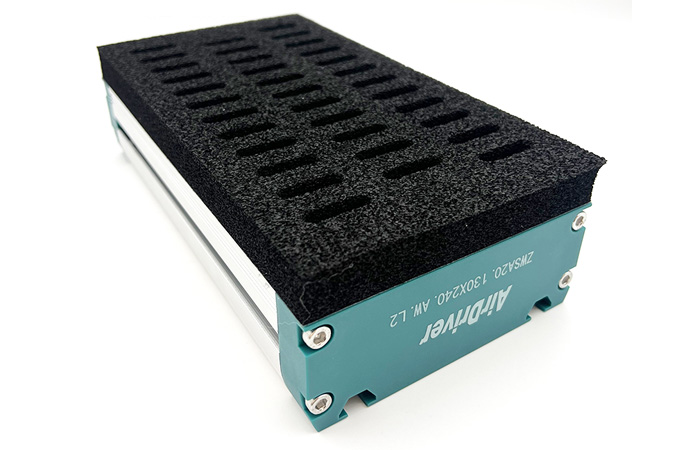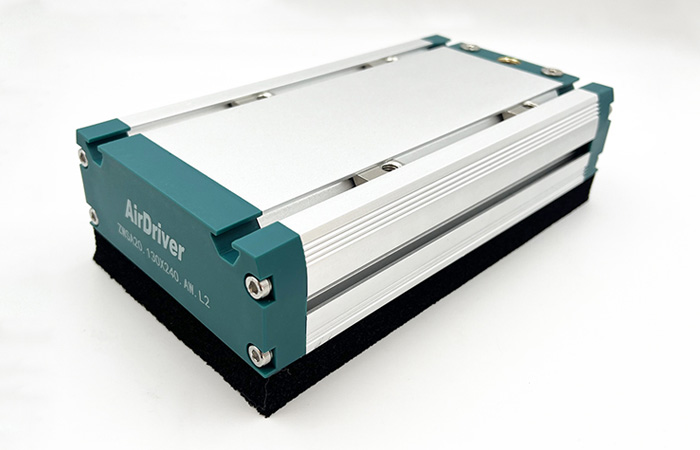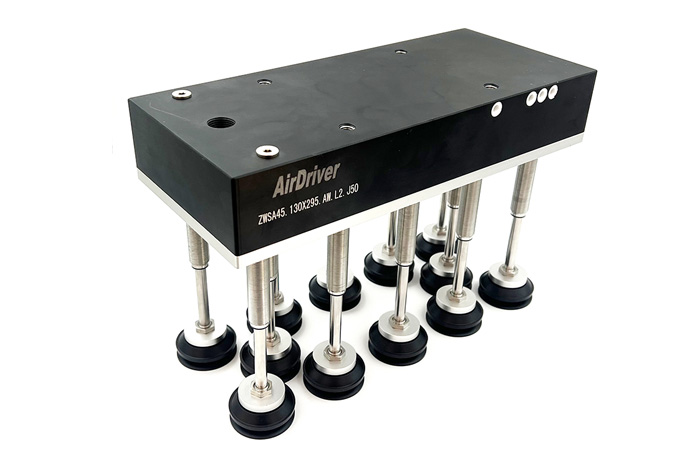


A sponge vacuum gripper is one of the most versatile end-of-arm tools in modern factory automation. Where a standard suction cup needs a smooth, airtight rim to hold a part, a sponge gripper uses a block of open-cell porous foam to create suction across an entire compliant surface. That simple difference lets it pick objects that rigid cups cannot: curved glass, soft bakery products, porous cartons, composite sheets, and irregular molded parts.
This guide explains what a sponge vacuum gripper is, how the porous foam actually generates holding force, the components that make it up, and where manufacturers are using it today. By the end you will know whether this gripper type fits your production line and what to specify when you order one.
A sponge vacuum gripper—also called a porous vacuum gripper or foam vacuum gripper—is an end effector built around a slab of open-cell material, typically polyurethane or silicone foam, mounted on a rigid backing plate. A vacuum source pulls air through the foam’s interconnected pores, dropping the pressure across the whole contact face. When the foam presses against a part, the compliant material seals around curves, holes, and surface defects, so the pressure differential does the gripping.
Because the seal is distributed rather than concentrated at one rim, a single sponge gripper can handle a wide range of part shapes and sizes without tool changes. It is especially valued for fragile, porous, or geometrically irregular products where a rigid cup would slip, crush, or simply fail to seal.
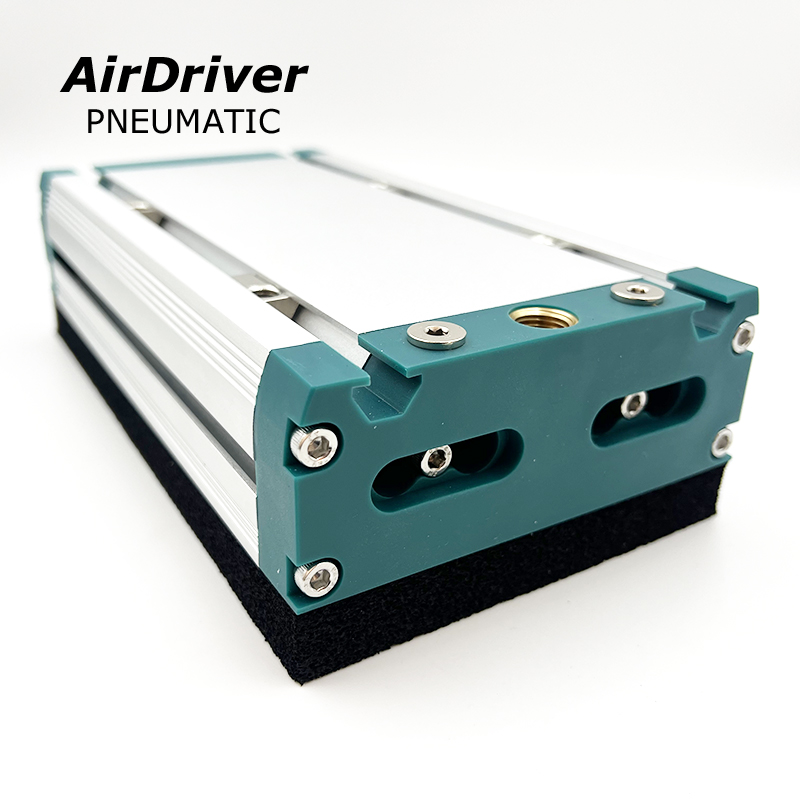
The working principle comes down to distributed negative pressure. A vacuum generator or pump evacuates air from inside the gripper body. Air is drawn continuously through the open pores of the foam and out through the vacuum port. The moment the foam touches a part, outside air can no longer rush in fast enough to equalize pressure, so a holding force is created across the entire contact area.
Two properties make this reliable. First, the foam conforms physically to the part, so small gaps and holes self-seal instead of breaking the vacuum. Second, suction is spread over a large area, which means high total holding force at modest vacuum levels—ideal for delicate items that would be damaged by concentrated pressure. Even slightly porous surfaces such as corrugated cardboard still grip, because the distributed flow keeps negative pressure stable.
Most sponge vacuum grippers share the same core building blocks:
Choosing the right foam porosity and thickness is the single biggest factor in performance, which is why many teams turn to custom sponge vacuum gripper solutions for unusual parts.
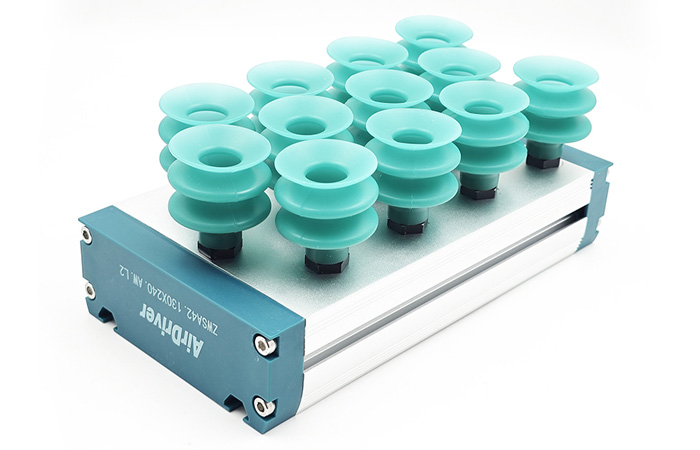
A rigid suction cup seals only at its lip, so it needs a flat, non-porous, airtight surface and precise placement. A sponge gripper removes those constraints:
For a deeper look at the trade-offs, see our comparison of sponge vacuum grippers vs suction cups.
The compliant, low-pressure grip makes sponge grippers a fit across many industries:
Each application changes the foam choice, vacuum demand, and cleaning requirements, so reviewing real sponge vacuum gripper applications before spec’ing helps avoid costly rework.
Match the gripper to the part and the environment using these factors:
Our sponge vacuum gripper selection guide walks through the calculations step by step.
A suction cup seals at a single rigid lip and needs a flat, airtight surface. A sponge gripper uses open-cell foam to create distributed suction over a compliant area, so it grips curved, porous, and irregular parts that cups cannot hold.
Yes. Because suction is distributed across the foam face, slightly porous surfaces such as corrugated cardboard or untreated wood still generate stable holding force, which is a key advantage over rim-sealing cups.
Typical industrial setups run between -0.4 and -0.8 bar at the gripper. Exact demand depends on part weight, contact area, and foam porosity. A larger area or denser foam can reduce the pressure needed for a given load.
Food-grade silicone or certified polyurethane foams are available for direct contact with bakery and packaged goods. Always confirm the material meets the hygiene standard (e.g., FDA or EU food contact) for your line.
Service life depends on abrasives, cycle rate, and cleaning. In clean, dry applications foam can last thousands of hours; in dusty or high-friction use it wears faster and the pad is designed to be replaceable.
Yes. Their low, distributed gripping force is cobot-friendly, and many designs mount directly to standard collaborative robot flanges for pick-and-place and packing tasks.
They perform best on clean, dry surfaces. Heavy oil or water film can reduce seal quality, so in those conditions choose a specialized foam and add a perimeter sealing frame, or consider an alternative gripper type.
Wipe or rinse the foam with a compatible solvent, inspect for embedded debris, and check the filter or mesh regularly. Replace the foam pad when compression set or clogging reduces holding force.
Most sponge grippers use a standard mounting plate and pneumatic connection, so they adapt to common industrial and collaborative arms. Confirm flange pattern, payload, and vacuum line routing with your integrator.
Estimate holding force as contact area multiplied by the vacuum pressure differential, then apply a safety factor of at least 2–4 depending on acceleration and part orientation. Our selection guide provides the full formula.
Need a Sponge Vacuum Gripper for Your Line?
AirDriver designs standard and custom sponge vacuum gripper solutions for food, glass, composite, and logistics automation. Tell us your part and payload—we will spec the right foam and vacuum source.