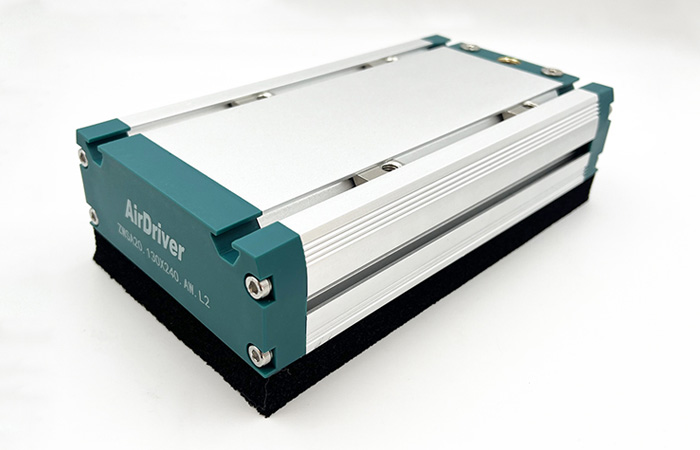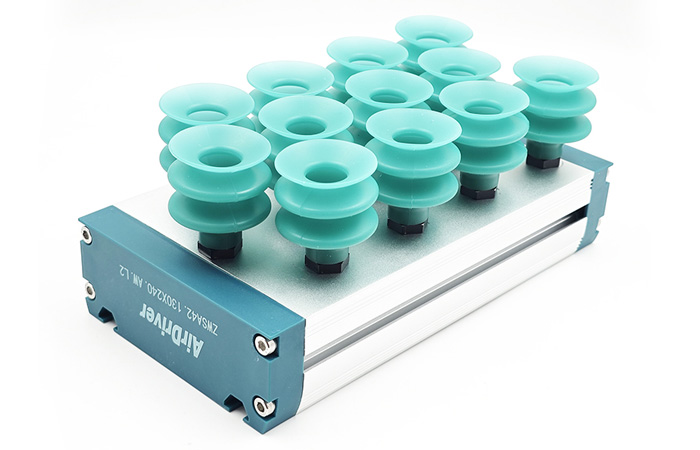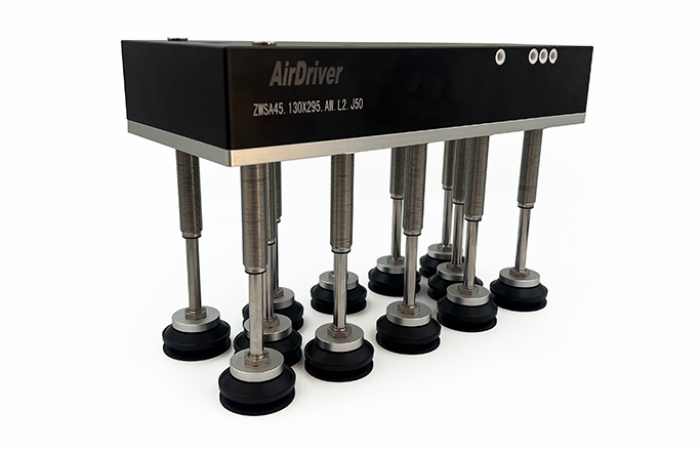


When you specify a vacuum suction gripper for an automation cell, the vacuum generator usually gets most of the attention. In real production lines, however, the majority of gripping failures happen at the contact interface instead of inside the ejector. Cartons slip, bags tear, thin panels deform and parts drop, not because the vacuum level was too low, but because the pad or cup did not match the product it had to lift.
That is why the foam pad versus suction cup decision deserves a structured evaluation instead of a habit-based one. This guide is written for automation engineers, system integrators and B2B procurement teams. It compares both technologies across six decision factors, then gives you a five-step method to size and select the right unit, so you can justify the choice internally and defend it during supplier review.
Quick Answer
Both technologies work on the same physical principle: a negative pressure difference between the gripper and the ambient atmosphere presses the product against the contact surface. The real difference is how the seal is created. A suction cup builds a discrete sealing line around a small, defined footprint. A foam pad builds a continuous seal across a large, compliant area. Everything else you care about in production, from holding force to air consumption, follows from that single difference.
| Decision Factor | Foam Pad Gripper | Suction Cup Gripper |
| Surface compatibility | Excellent on rough, porous, perforated and textured surfaces | Best on flat, smooth, non-porous surfaces |
| Product shape flexibility | One pad covers many SKUs and mixed sizes | Array must match footprint of each product |
| Holding force | Force spread over a wide area, low pressure per square centimetre | Concentrated force, higher lift per unit of sealing area |
| Leakage and air use | Foam restricts flow, tolerant of partial coverage | Uncovered cups leak, needs check valves or zone control |
| Cycle time | Slightly longer evacuation, almost no changeover | Fastest build-up and release, ideal for high-speed cells |
| Maintenance and cost | Foam is a wear part, replace periodically, higher unit price | Low-cost lips, easy to stock, sensitive to abrasive wear |
Surface condition is the first filter, because no amount of vacuum flow can compensate for a seal that never forms. A suction cup needs a continuous sealing edge. On glass, polished metal, laminated board, plastic film or painted panels, it works extremely well. On corrugated board, raw wood, textile, perforated sheet or rough castings, air leaks in faster than a reasonably sized ejector can remove it, the vacuum level collapses and the pick fails.
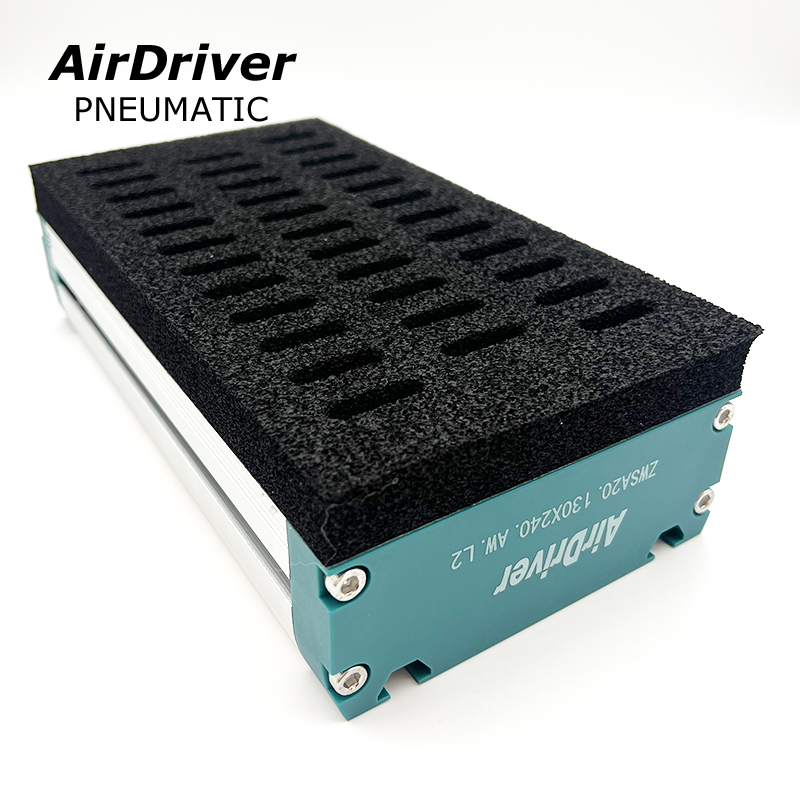
A foam pad solves this differently. The open-cell foam compresses into surface irregularities and turns thousands of small gaps into a distributed seal. It also bridges holes and perforations, because only the covered area is actively evacuating while the surrounding foam blocks inflow. That is why foam is standard for bag handling, woven sacks, uneven cartons and textured plastic housings.
If your line runs one product for months, a dedicated cup array is efficient and predictable. If your line runs mixed SKUs, short batches or e-commerce assortment, tooling flexibility becomes the bigger economic factor. Every changeover costs operator time, programming time and line availability, and those costs are rarely visible in the unit price of the gripper.
A foam vacuum gripper typically covers a wide range of geometries with a single tool. AirDriver builds the ZWSA sponge pad series with pad thickness of 15 mm or 20 mm, widths of 60 mm, 80 mm and 130 mm, and lengths from 120 mm to 415 mm, with custom dimensions available. In practice, one pad often replaces three or four cup arrays, which reduces tooling inventory and simplifies spare parts management.
Suction cup arrays are not inflexible, but flexibility has to be designed in. Multiple cup sizes, adjustable mounting slots and individually valved zones all help. The trade-off is a more complex tool that still needs a defined contact footprint on every product.
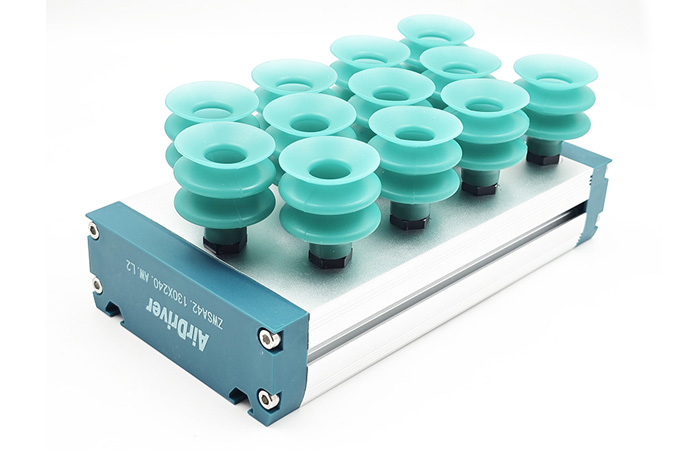
Holding force is often oversimplified as a single number per cup. What matters is the total effective force after real-world derating, and how that force is distributed across the product. A suction cup vacuum gripper concentrates force at discrete points, which is ideal for rigid, heavy products such as glass sheets, metal plate, stone slabs or full cases. ZWSA cup arrays are available with cup diameters of 5 mm, 32 mm and 42 mm, in body widths of 60 mm and 130 mm and lengths from 120 mm to 415 mm.
A foam pad spreads force across the full contact area. Peak pressure per square centimetre is lower, which is exactly what you want for thin-walled cartons, flexible packaging, display modules and delicate assemblies. The product is held without local deformation or visible marking. The practical limit appears with very heavy rigid loads, where the total force of a cup array simply scales better than an enlarged foam face.
Compressed air is one of the most expensive utilities in a factory, and leakage is where vacuum projects quietly lose money. With a cup array, any cup that is not fully covered by the product becomes an open leak path. If your array is sized for the largest SKU and your line also runs the smallest one, several cups may sit uncovered on every cycle.
Two design choices control this. The first is a one-way check valve on each cup or zone, so uncovered positions close automatically. AirDriver ZWSA grippers integrate this function, with check valve options for vertical-only suction or crosswise suction. The second is correct vacuum generator sizing: an oversized ejector covers leakage but burns air continuously, while an undersized one drops vacuum during acceleration.
Foam pads are intrinsically more forgiving here. The foam itself restricts airflow, so partial coverage causes far less leakage than an open cup. This is why foam systems can run with smaller generators on porous products, and why they stay stable when product placement on the conveyor is not perfectly repeatable.
Cycle time is decided by how fast vacuum builds and how fast it releases. A small cup has a tiny internal volume, so it reaches working vacuum in milliseconds and releases quickly, especially with a short blow-off pulse. For high-speed pick-and-place above roughly 60 picks per minute, or for applications such as case packing and carton erecting, cups remain the first choice.
A foam pad has a larger volume to evacuate and compresses slightly at contact, which adds a small amount of time to each cycle. In exchange, it removes changeover time between batches. The right comparison is therefore not cycle time per pick, but throughput per shift. On mixed-SKU lines the foam pad usually wins on overall equipment effectiveness even when it is marginally slower per individual pick.
Both technologies need planned maintenance, but the cost profile is different. Foam is a genuine wear part. It compresses thousands of times per shift, it can clog with dust, and it can be cut by sharp edges or degraded by oil mist. Plan on periodic inspection and replacement, and keep spare pads in stock. The unit cost is higher than a single cup, but one pad often serves several product families.
Suction cup lips are cheaper and individually replaceable, which keeps spare part cost low and makes root-cause analysis easy: a worn lip is visible. On abrasive surfaces such as concrete, raw wood or rough castings, however, lips wear quickly and replacement frequency rises. Cleaning also matters in food and dusty environments, where a blocked filter or a contaminated lip reduces performance long before the part looks worn.
Send us your product weight, surface material, cycle time and robot model. AirDriver application engineers will review the six factors above and recommend a configuration, with no obligation.
Once you understand the trade-offs, selection becomes a repeatable process. Work through the following five steps in order and record the result for each one. That document is also the most useful thing you can hand to a supplier, because it turns a vague enquiry into a specification that can be quoted, tested and validated.
Start with facts, not estimates. Record the minimum, average and maximum product weight, the contact footprint available on the top face, the overall dimensions, the centre of gravity and the stack height tolerance. Note whether the product arrives oriented or random, and whether it is rigid or deforms when lifted. These five data points determine everything downstream.
Classify the contact surface as smooth and non-porous, or porous and irregular. A simple field test is to press a cup against the surface and watch the vacuum gauge: if the level cannot reach a stable working value, the surface leakage exceeds what a cup can seal. Cardboard, MDF, raw wood, fabric, woven bags and perforated trays fall into the porous group and point towards foam. Glass, metal, plastic film and coated board point towards cups.
Use the standard sizing equation before you look at any catalogue:
F = m × g × S
Select the safety factor from the worst case your gripper will experience. Use 2 for slow horizontal transfer of a light, rigid product. Use 3 to 4 for vertical lifts, rotation at the wrist, or fast acceleration and deceleration. Use a higher factor, or add mechanical support, for overhead handling above people and for fragile products where a drop is costly.
Worked example: a 12 kg filled carton lifted vertically with wrist rotation needs F = 12 × 9.81 × 4, roughly 471 N. A 50 mm cup at −70 kPa generates about 137 N of theoretical force. On corrugated board, derate to around 60 per cent of theoretical, so each cup delivers roughly 82 N. You need about six 50 mm cups, or one foam pad with a contact area sized to the carton face. The cup array gives you speed, the foam pad gives you tolerance to carton variation.
The gripper is part of the payload. Cobots commonly offer 3 kg to 20 kg of rated payload, and that rating includes the end-of-arm tooling. A heavy multi-cup plate with an external ejector, valves and sensors can consume a surprising share of it. Integrated designs help: ZWSA grippers carry the vacuum generator and one-way check valve inside the body, which removes external components and shortens the air path.
Also check the moment arm. Tooling that is long, or offset from the flange, reduces the effective payload even when total weight is within spec. Confirm the acceleration profile of your motion, then apply the matching safety factor from step 3.3.
Finally, match the decision to how the line actually runs. Record the required picks per minute, the number of shifts, how often SKUs change, and whether changeover is manual or automatic. Add the environment: dust, humidity, oil mist, temperature and washdown requirements all affect foam life, cup compound and filter maintenance intervals.
Product weight, contact surface, cycle time and robot model are enough for our team to size the pad or cup array and specify the right ejector flow class. You will receive a written recommendation you can share with your integration partner.
Two grippers with the same catalogue photo can perform very differently after six months in production. What separates a dependable partner from a low-cost vendor is engineering support, dimensional flexibility and spare parts continuity. For a detailed framework, read our guide on how to evaluate vacuum gripper suppliers for long-term projects.
With 10099 square metres of plant area, eight assembly lines and more than 1000 product categories, AirDriver supports OEM and ODM vacuum projects from sample testing through to repeat production supply.
Use a foam vacuum gripper when the contact surface is porous, uneven, perforated or textured, or when your line runs mixed product sizes. Typical applications include corrugated cartons, woven and paper bags, wood panels, perforated trays and fragile assemblies that cannot tolerate concentrated gripping force.
Use a vacuum cup gripper when the product has a flat, smooth and non-porous surface and when cycle time is a priority. Glass, sheet metal, plastic sheet, film-wrapped bundles and coated board are all ideal candidates, especially at high pick rates where fast vacuum build-up and release matter most.
Standard flat cups are not suitable for uneven surfaces, because the sealing edge cannot close and the vacuum leaks away. Bellow cups with 1.5 folds or more add stroke compensation and handle moderate height differences. For genuinely rough, porous or irregular surfaces, a foam pad remains the more reliable choice.
Work through five steps: record product weight and dimensions, evaluate surface material and porosity, calculate the required holding force with the correct safety factor, confirm robot payload and motion profile, then match the gripper to your production cycle and environment. Documenting these five results gives your supplier everything needed for an accurate proposal.
Yes. Heavy rigid loads are usually handled with large-diameter cups in a multi-cup array, because concentrated force scales efficiently. The limiting factor is rarely the vacuum level itself, it is the effective sealing area, the friction between cup and product, and the robot payload available after tooling weight is deducted.
For uniform cartons on a high-speed line, a bellow cup array gives the fastest cycle. For mixed carton sizes, warped boxes or variable fill levels, a foam vacuum gripper gives more consistent picks and fewer micro-stoppages. Many plants run both: cups on the fastest fixed-format line, foam on the mixed-SKU line.
The question is not which technology is better in absolute terms. It is which one matches your surface, your product mix, your cycle time and your maintenance reality. Suction cups win on speed and concentrated force on smooth, repeatable products. Foam pads win on tolerance, adaptability and uptime whenever products vary or surfaces are difficult. Work through the five selection steps, document the result, and you will have a specification that survives contact with a real production line.