

A suction cup vacuum gripper looks simple, yet it is the component that most often decides whether an automated line runs at rated speed or stalls on dropped parts. When the cup, material, and vacuum source are matched to the workpiece, pick-and-place becomes quiet and repeatable. When they are not, you get marks on finished surfaces, wasted compressed air, and unplanned stops.
This guide walks B2B buyers and system integrators through a practical selection route: define the workpiece, pick the cup type and material, calculate holding force, choose the vacuum source, and confirm supplier capability. If you want the physics first, read our explainer on how vacuum grippers work.
Every correct gripper decision starts with the part, not the product page. Capture four facts before you spec anything.
● Surface and porosity — glass, metal, and clean plastic seal easily; cardboard, wood, and textured parts leak and need higher flow.
● Weight and centre of gravity — note the heaviest item in the mix, not the average, and where the load concentrates.
● Contamination and temperature — oil, dust, moisture, and heat change both cup material and vacuum behaviour.
● Motion profile — fast transfer, vertical lift, and rotation each add shear and acceleration forces the cup must hold.
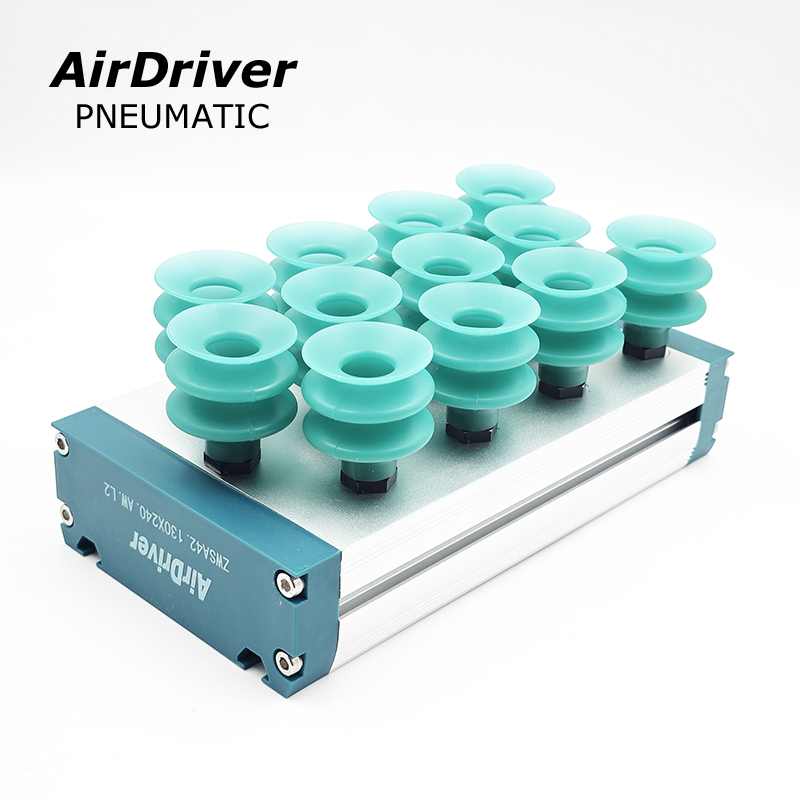
Cup shape is the biggest lever for first-touch reliability. The table below maps the three common families to where they win.
| Cup type | Best surface | Key advantage | Watch-out |
|---|---|---|---|
| Flat | Smooth, rigid, non-porous | Fast response, low air use | Needs flat, level contact |
| Bellows (1.5 fold) | Uneven, slightly curved | Absorbs height variation | Slightly slower cycle |
| Foam / sponge | Porous, irregular | Conforms, seals leaky parts | Shorter wear life |
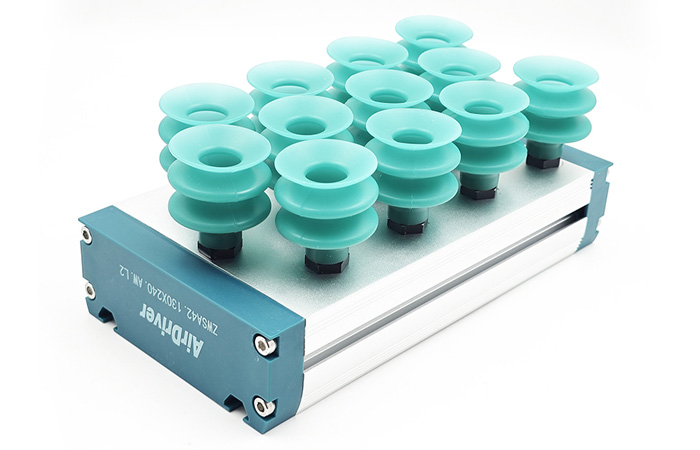
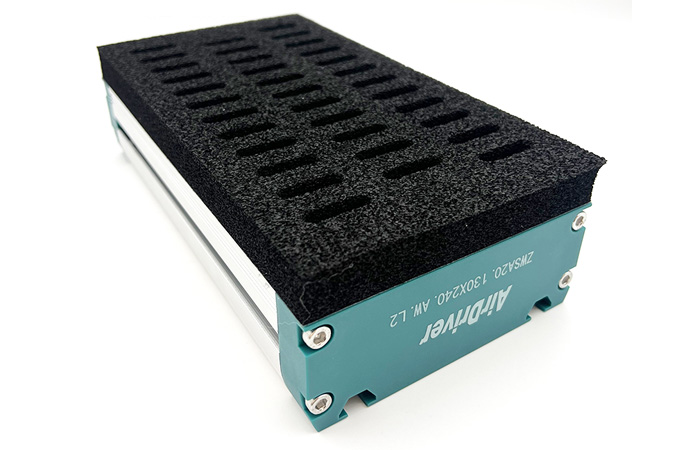
Flat cups give the fastest response on rigid panels. When the surface is uneven or the pick point varies, a 1.5 fold bellows suction cup absorbs height differences and reduces impact marks. For porous or highly irregular loads such as cartons and molded packs, a foam vacuum gripper conforms to the shape and seals where rigid cups cannot.
Material decides wear life and compliance. Match it to the process, not the catalogue default.
● Silicone — food-contact friendly, wide temperature range, good for packaging and pharma; moderate wear resistance.
● Nitrile (NBR) — oil resistant, economical, the standard for general industrial and greasy parts.
● Polyurethane (PU) — high abrasion resistance for high-cycle and rough-surface handling.
● FKM (Viton) — for high-temperature or aggressive-chemical environments; higher cost.
Request the supplier’s material data and any food- or medical-grade certificates before committing to a line that must pass audits.

Holding force is the vacuum level multiplied by the effective sealing area, then derated for real-world leakage and motion. Use this rule of thumb:
Holding force: F = ΔP × A × safety factor, where ΔP is the vacuum level (pressure difference) and A is the effective sealing area. Convert the result to the worst-case part weight before choosing cup diameter.
| Motion | Recommended safety factor | Reason |
|---|---|---|
| Horizontal transfer | 2:1 | Gravity assists, low shear |
| Vertical lift | 4:1 | Full load on seal, drop risk |
| High-speed or shock | 4:1 or higher | Acceleration adds force |
Horizontal transfer uses a 2:1 safety factor. Vertical lift or shock-prone motion uses 4:1 or more. Never size to a single clean sample; qualify the worst realistic part at line speed. A cup that holds a pristine panel on the bench can drop the same panel once dust and heat build up.
The generator must reach target vacuum fast enough for your cycle and survive the leakage your cups see.
● Venturi / ejector (compressed air) — compact, mounts at the tool, ideal for porous loads needing high flow; watch total air consumption at speed.
● Electric vacuum pump or blower — lower running cost and noise, better for stable, low-leak parts and centralised systems.
Size the generator for the summed flow of every cup that may be active at once, plus a margin for filters and hose loss. An undersized vacuum is the silent cause of intermittent drops.
The gripper is only as good as its interface to the robot or fixture. Confirm the mount pattern (for example ISO 9409-1 flange), the air and electrical connections, and whether you need spring compensation for uneven surfaces. If the line handles several part sizes, design for adjustable cup positions or independent vacuum zones so idle cups do not waste flow. Our automated packaging case study shows how modular tooling cut changeover time on a carton line.

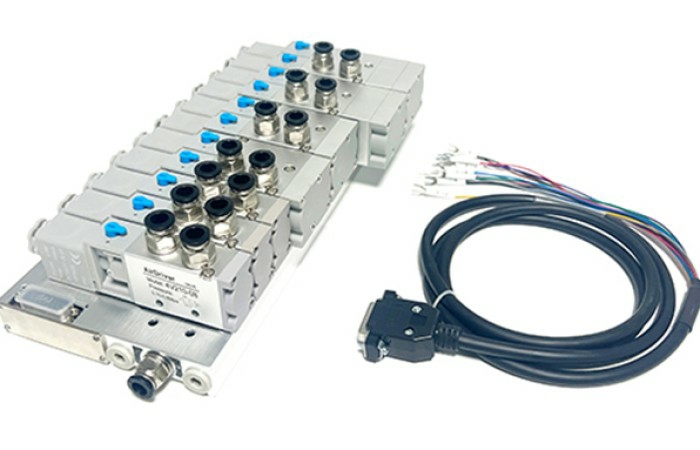
For B2B buyers, total cost and uptime matter more than the lowest unit price. AirDriver has shipped pneumatic automation components since 2018 from a 10,099 m² plant with 200+ staff and 8 assembly lines, offering a one-stop range from vacuum grippers to valves and FRL units. When you evaluate any supplier, check these:
● Certificates — ask for CE, RoHS, REACH, and ISO 9001 evidence relevant to your market.
● Samples and testing — run the real part at line speed before volume orders.
● Lead time and MOQ — confirm stock depth for consumable cups and spares.
● Engineering support — a supplier who helps you size the tool reduces your integration risk.
See our company profile for plant, capacity, and quality-system details.
● Oversizing the cup — wastes air and slows response without improving safety.
● Ignoring surface roughness — textured or porous parts leak and need a different cup or higher flow.
● No fail-safe — vertical lifts need check valves so one lost seal does not drop the load.
● No spare-parts plan — cups are consumables; stock the exact replacement before launch.
Need a suction cup vacuum gripper matched to your production line?
Send us your part weight, surface type, and cycle-time target. Our engineers return a configured vacuum gripper proposal with samples and lead time.
Before you order, confirm: workpiece surface and weight captured; cup type and material chosen; holding force calculated with safety factor; vacuum source sized for total flow; mounting and changeover designed; supplier certificates and samples verified. Get those right and your vacuum gripper will keep the line moving shift after shift.